Top 10 Governance, Risk, and Compliance (GRC) Software Solutions

The Apono Team
April 24, 2026
Governance is breaking. Not because companies care less about risk, but because modern infrastructure moves faster than the controls designed to govern it. In 2026, governance has to keep up with cloud-native architectures, AI adoption, API sprawl, and the explosion of machine identities across production environments.
Today’s governance failures increasingly show up at the access layer: overprivileged users, weak enforcement, and limited visibility into who can reach sensitive systems and data. As cloud environments grow more dynamic, the attack surface keeps expanding. The proof is in the headlines: 63% of breached organizations lacked AI governance policies to manage or prevent shadow AI, and 97% of those that reported an AI-related security incident lacked proper AI access controls.
Statistics like this show why governance, risk, and compliance software matters more than ever. For fast-moving engineering teams, the right GRC solution should help reduce risk, automate control workflows, and connect governance to identity, access, and cloud operations so compliance can operate at CI/CD speed.
Best GRC Solutions at a Glance
- Best overall for cloud-native engineering and security teams that need to enforce least privilege in real time with self-serve, just-in-time access: Apono
- Best for large enterprises already running on ServiceNow: ServiceNow IRM
- Best for highly regulated, process-heavy enterprises: Archer
- Best for global enterprises with mature, cross-functional GRC programs: MetricStream
- Best for organizations that need GRC to sit alongside privacy and AI governance: OneTrust
- Best for lean security and compliance teams that want to automate evidence collection: Hyperproof
- Best for compliance and TPRM teams that want a more continuous, evidence-driven approach: Lema
- Best for startups and mid-market SaaS companies that want to get audit-ready quickly: Drata
- Best for teams that want a flexible, no-code GRC platform: LogicGate
- Best for audit- and controls-heavy enterprises that want to connect internal audits in one system: AuditBoard
What are governance, risk, and compliance (GRC) software solutions?
Governance, risk, and compliance (GRC) software solutions help you define controls, assess risk, document evidence, and prove they are meeting internal policies and external requirements.
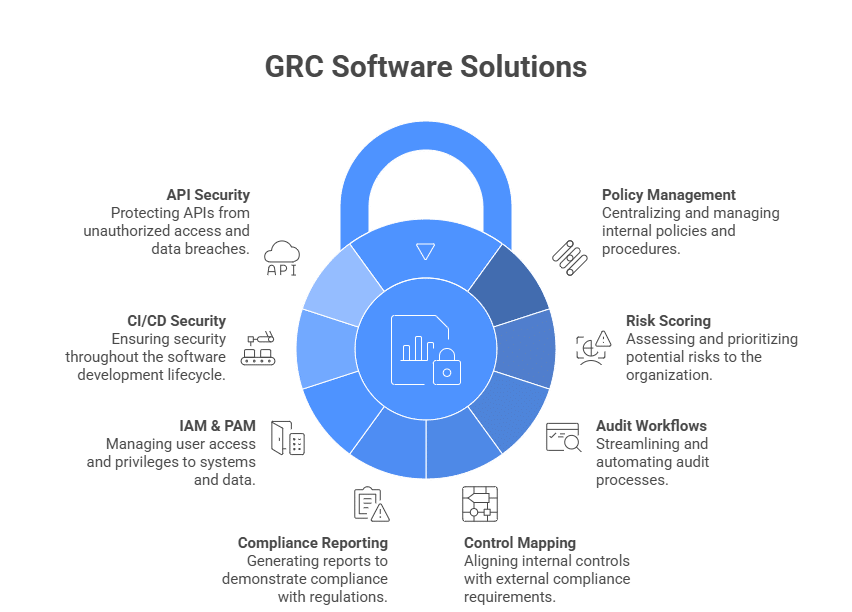
GRC solutions centralize policy management, risk scoring, audit workflows, control mapping, and compliance reporting. In cloud-native environments, governance increasingly overlaps with identity and access management (IAM), privileged access management (PAM), CI/CD, and API security. However, the real risk is often at the access layer: who can reach production systems, data stores, cloud resources, and machine identities, and for how long.
The strongest solutions do more than track policies. They help connect governance to runtime enforcement through controlled, auditable access workflows.
Types of Governance, Risk, and Compliance Software Solutions
- Enterprise GRC platforms (all-in-one suites): Classic umbrella platforms for managing everything from risk registers to audits. Useful for large organizations that need broad oversight across legal, security, IT, and compliance teams.
- Identity Governance and Administration (IGA) solutions: IGA solutions focus on identity lifecycle management, access reviews, role modeling, and certification processes. They help answer questions like who should have access and when it should be reviewed.
- Privileged Access Management (PAM) solutions: PAM solutions are built to secure elevated access to sensitive systems and production environments.
- Cloud Infrastructure Entitlement Management (CIEM): CIEM focuses on permissions sprawl in cloud environments, helping security and platform teams discover excessive entitlements and reduce overprivileged access in cloud services.
- Access Automation and Just-in-Time (JIT) Access: This category sits closest to day-to-day enforcement. These tools automate time-bound, task-scoped access, remove standing privileges, and create audit-ready trails for every approval and revocation. For cloud-native teams, this is often the layer that turns governance from a spreadsheet exercise into an operational control.
Benefits of Governance, Risk, and Compliance Software Solutions
- Reduced Risk Through Least-Privilege Enforcement: Limiting access by role, task, and time window reduces the exposure created by standing privileges and unnecessary access to sensitive systems.
- Faster Incident Response Without Sacrificing Security: Security teams can grant urgent access during break-glass events without creating long-lived privileged access that lingers after the incident ends.
- Continuous Compliance With Real-Time Auditability: Strong GRC workflows make it easier to show who had access, why it was approved, and when it was revoked.
- Increased Developer Productivity With Self-Serve Access: Policy-driven, self-serve workflows reduce ticket friction for developers while keeping approvals controlled and auditable.
- Improved Visibility Across Human and Non-Human Identities: Better identity visibility helps teams discover risky entitlements earlier and govern both human and non-human access with more confidence.
Key Features to Look For in a Governance, Risk, and Compliance Software Solution
- Automated Just-In-Time (JIT) Access Controls: The best solutions replace persistent access with time-bound, task-scoped permissions, reducing the blast radius of credential compromise.
- Self-Serve, Policy-Driven Access Workflows: Developers should be able to request access quickly while security teams still enforce approval scope and automatic revocation.
- Comprehensive Audit Logs and Real-Time Visibility: Complete audit trails and live visibility make it easier to prove that controls are being enforced, not just documented.
- Identity-Centric Risk Visibility Across Human and Non-Human Identities: Modern environments include employees, contractors, workloads, and service accounts, all of which can create risk if left overprivileged. A strong platform should help teams discover where sensitive access exists and prioritize governance where exposure is highest.
- Cloud-Native, API-Driven Architecture: API-driven platforms are better suited to modern engineering environments because they scale with developer velocity and support automation across broader API security workflows.
10 Top Governance, Risk, and Compliance Software Solutions
Table 1: How We Rated the GRC Solutions
To compare these GRC platforms fairly, we scored each one across five criteria that matter most for modern security, compliance, and engineering teams. See the table below for our breakdown.
| Software | Governance Breadth | Automation & Continuous Compliance | Runtime Enforcement & Least Privilege | Engineering & Cloud-Native Fit | Time to Value |
| Apono | 8/10 | 9/10 | 10/10 | 10/10 | 10/10 |
| ServiceNow IRM | 9/10 | 8/10 | 3/10 | 6/10 | 5/10 |
| Archer | 9/10 | 7/10 | 2/10 | 5/10 | 4/10 |
| MetricStream | 10/10 | 8/10 | 2/10 | 5/10 | 4/10 |
| OneTrust | 9/10 | 8/10 | 3/10 | 6/10 | 6/10 |
| Hyperproof | 6/10 | 9/10 | 2/10 | 7/10 | 8/10 |
| Lema AI | 7/10 | 8/10 | 6/10 | 8/10 | 10/10 |
| Drata | 6/10 | 9/10 | 3/10 | 8/10 | 9/10 |
| LogicGate | 8/10 | 8/10 | 2/10 | 6/10 | 7/10 |
| AuditBoard | 9/10 | 8/10 | 2/10 | 5/10 | 6/10 |
1. Apono
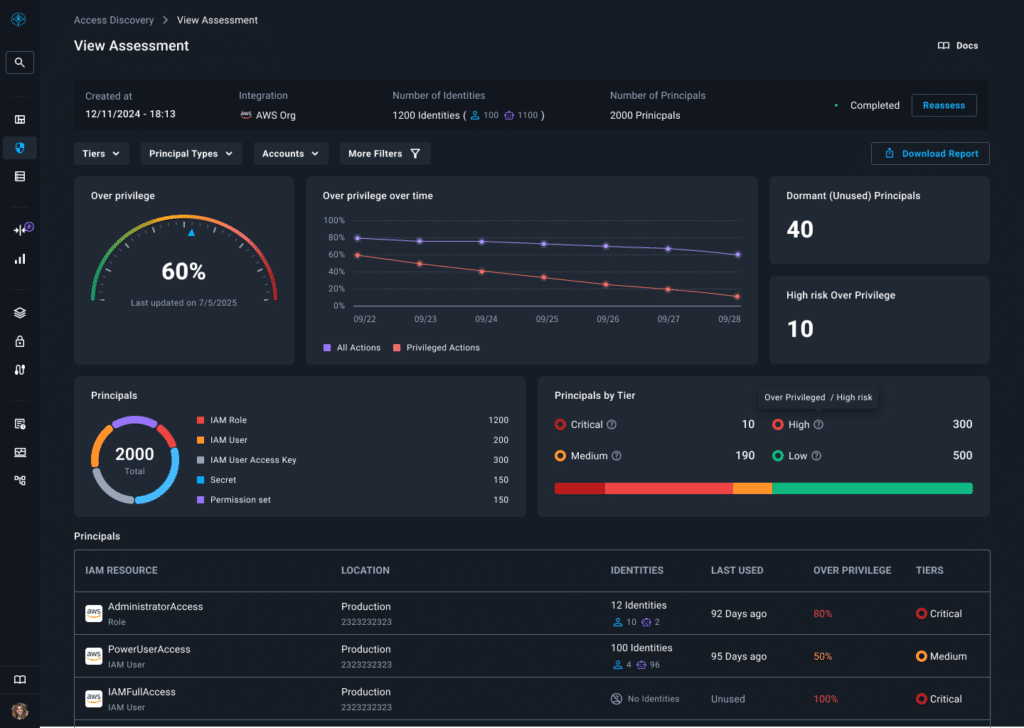
Apono is not a traditional all-in-one GRC platform—it is a cloud-native access governance and privileged access platform that helps organizations enforce governance controls at the access layer.
Instead of relying on tickets or static roles, Apono replaces standing permissions with automated, just-in-time and just-enough access across cloud infrastructure, databases, SaaS tools, and internal resources.
Engineers can request access through Slack, Microsoft Teams, or CLI, with policy-based approvals and full audit context captured for every request. All this makes Apono a strong fit for teams that already have a broader GRC program in place but need a better way to operationalize least privilege, reduce audit fatigue, and support continuous compliance in day-to-day engineering workflows.
Main features:
- Automated just-in-time and just-enough access to remove standing privilege and reduce lateral movement risk.
- Policy-driven approvals and self-serve access flows that fit existing engineering workflows.
- Break-glass access for urgent production incidents without leaving permanent elevated access behind.
- Cloud identity governance capabilities that improve visibility into who has access to what, with context.
Best for: Cloud-native engineering and security teams that need to enforce least privilege in real time with self-serve, just-in-time access.
Pricing: Get in touch with the Apono team for pricing tailored to your requirements.
Review: “Quick and easy config to integrate access control with a myriad of service providers and data stores. For the admin, it’s pretty straightforward to define and implement access flows. For the requester, all they have to do is ask for it via Slack and they get what they need within seconds.”
2. ServiceNow Integrated Risk Management (IRM)
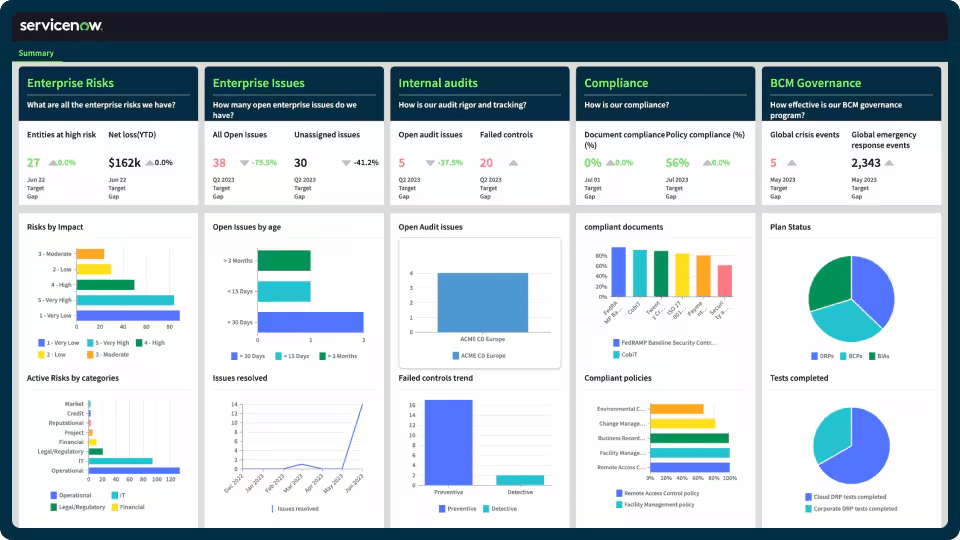
ServiceNow is a traditional enterprise GRC and integrated risk management (IRM) platform built to help large organizations centralize risk and resilience programs on a single platform. Its GRC and Integrated Risk Management products focus on connected data and enterprise-wide visibility rather than access-layer enforcement alone.
Main features:
- Operational and cyber resilience management for visibility into disruptions.
- Integrations with classification, regulatory content, and risk quantification tools.
- Audit management and regulatory change capabilities.
Best for: Large enterprises already running on ServiceNow that want to connect GRC and business workflows on the same platform.
Pricing: By inquiry, with package tiers.
Review: “I find it easy to use and track issues and updates with notes. Reporting is very good. The initial setup was easy with support.”
3. Archer
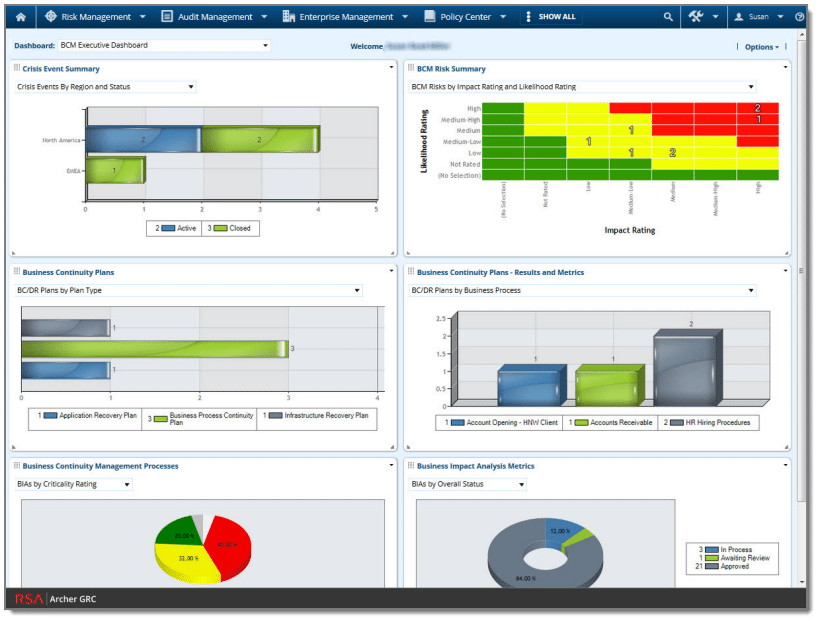
Next on the list is Archer, a traditional enterprise GRC and integrated risk management platform. Archer positions itself as a single, configurable platform for managing multiple dimensions of risk, with solution areas that include audit management and corporate compliance.
Main features:
- Reporting for enterprise-wide visibility and accountability.
- Single configurable platform for integrated risk management across multiple domains.
- Enterprise and operational risk management with audit management.
Best for: Highly regulated, process-heavy enterprises that need a deeply configurable IRM platform.
Pricing: By inquiry.
Review: “RSA Archer met my team’s needs for building out a Vendor Risk Management program, allowing full control and build out of our customized workflows”
4. MetricStream
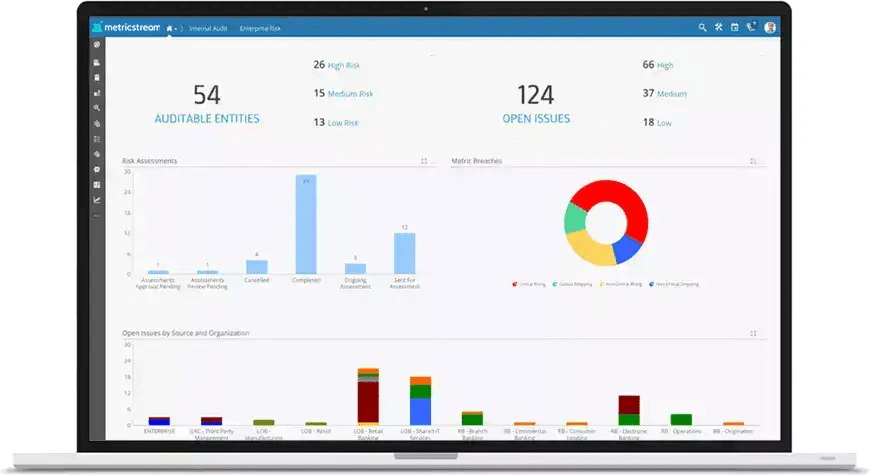
MetricStream positions its offering around Connected GRC, along with a shared platform that provides teams with a single source of truth and more connected reporting across risk domains. MetricStream sits firmly in the broad GRC program management category: it is built to help organizations coordinate and automate GRC processes at scale, rather than focus primarily on runtime access enforcement for engineering teams.
Main features:
- Connected GRC architecture spanning business GRC, cyber GRC, and ESG workflows.
- A centralized platform with integrated data and reporting for risk-aware decision-making.
- Policy management capabilities for coordinating enterprise control programs.
Best for: Global enterprises with mature, cross-functional GRC programs that need a unified view across business risk and compliance.
Pricing: By inquiry.
Review: “One of the key strengths is its flexibility in supporting multiple risk frameworks and regulatory standards such as ISO 31000, NIST, and ISO 27001.”
5. OneTrust
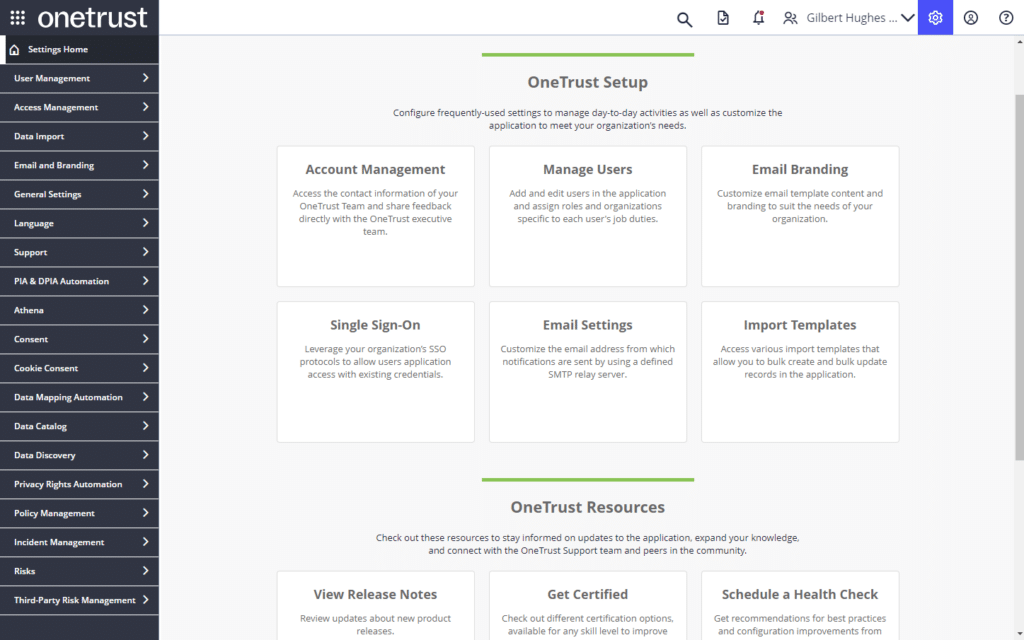
OneTrust is a broad governance platform with a dedicated Tech Risk & Compliance solution, rather than a tool focused only on classic audit and policy workflows. Its platform spans privacy, risk, compliance, third-party management, and AI governance, while the Tech Risk & Compliance offering is positioned around compliance automation.
Main features:
- Compliance automation with automated evidence collection and control tracking.
- IT risk management for mapping and addressing IT and security risks.
- Built-in coverage for third-party risk and AI governance.
Best for: Organizations that need GRC to sit alongside privacy, data governance policy, third-party risk, and AI governance.
Pricing: By inquiry.
Review: “I like the automated workflows and quick reporting in OneTrust Tech Risk & Compliance as they significantly reduce manual effort and make audits far less stressful.”
6. Hyperproof
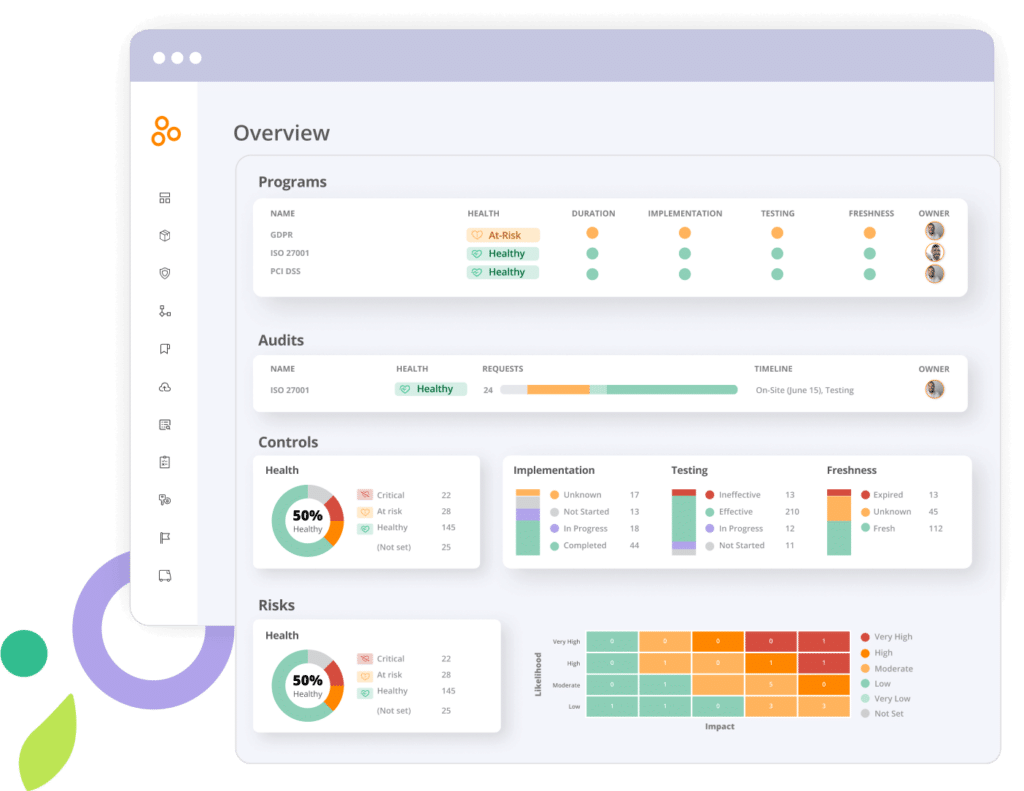
Hyperproof is an AI-powered GRC and compliance operations platform. We found that its positioning is less about heavyweight enterprise IRM sprawl and more about helping teams automate controls and keep evidence collection moving with less manual coordination.
Main features:
- Control mapping across frameworks to reduce duplicate work.
- Modules for compliance, risk management, audit, and third-party risk management.
- Centralized compliance and security workflows.
Best for: Lean security and compliance teams that want to automate evidence collection without buying a heavyweight enterprise IRM suite.
Pricing: By inquiry.
Review: “I like Hyperproof’s automated recurring collection tasks that save me time for other things.”
7. Lema
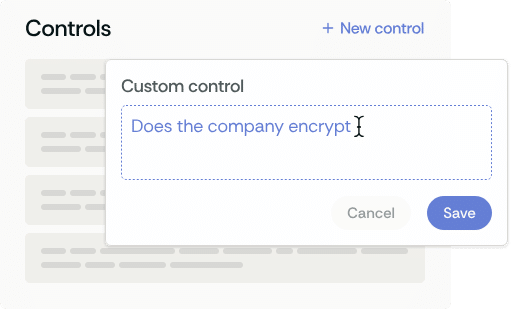
Lema is an agentic third-party risk management (TPRM) and risk engineering platform built to help teams uncover third-party risk that traditional questionnaire-driven workflows often miss. Rather than acting like a broad all-in-one GRC suite, Lema focuses on continuous vendor investigation and evidence-backed risk analysis.
Main features:
- Agentic risk engineering that forensically investigates vendors in real time.
- Blast radius monitoring that maps third-party interfaces with critical assets and data.
- Forensic AI assessments that validate vendor documents and surface material risks.
Best for: Compliance and TPRM teams that want a more continuous, evidence-driven approach to third-party risk.
Pricing: By inquiry.
8. Drata
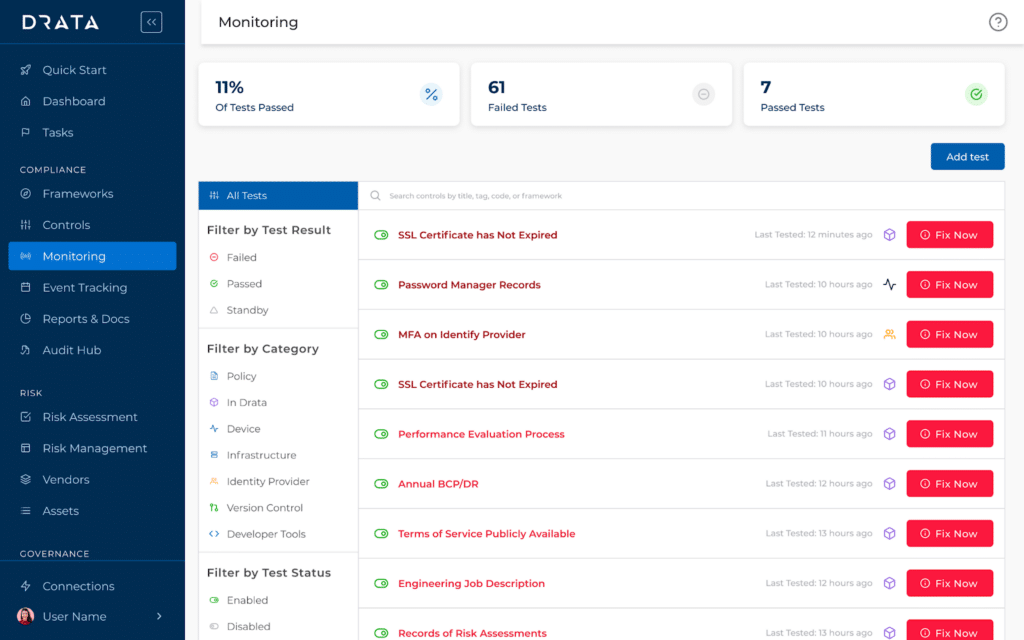
Drata’s core focus is streamlining audit readiness across frameworks such as SOC 2, ISO 27001, and HIPAA, with adjacent capabilities for risk management and trust center workflows. In this list, we think Drata sits closer to continuous compliance automation than to heavyweight enterprise IRM platforms or access-governance tools.
Main features:
- Trust management features, such as trust center options.
- Risk management capabilities for risk assessments and mitigation workflows.
- Automated evidence collection and continuous control monitoring.
Best for: Startups and mid-market SaaS companies that want to get audit-ready quickly and maintain continuous compliance across frameworks.
Pricing: Drata publishes plan tiers, including Foundation, Advanced, and Enterprise.
Review: “Drata gives us an overview of all necessary renewals for evidence, and the use of templates is really handy.”
9. LogicGate Risk Cloud
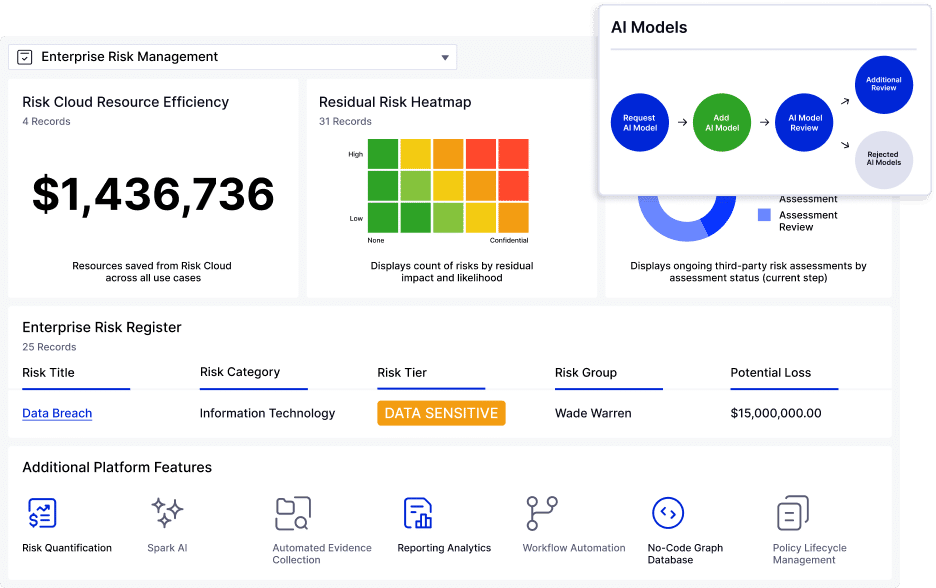
LogicGate is a broad enterprise GRC platform built around its no-code Risk Cloud platform. It is designed to help organizations centralize and automate governance, risk, and compliance workflows across use cases like enterprise risk management and regulatory compliance.
Main features:
- No-code workflow automation and configurable applications.
- Controls compliance capabilities for automating evidence collection.
- Support for over thirty security and privacy frameworks, plus integrations with tools like Jira.
Best for: Teams that want a flexible, no-code GRC platform they can tailor to their own workflows.
Pricing: By inquiry.
Review: “The software eliminates manual, spreadsheet-based GRC work through automated workflows, which helps reduce audit delays and spares me a lot of time.”
10. AuditBoard (now Optro)
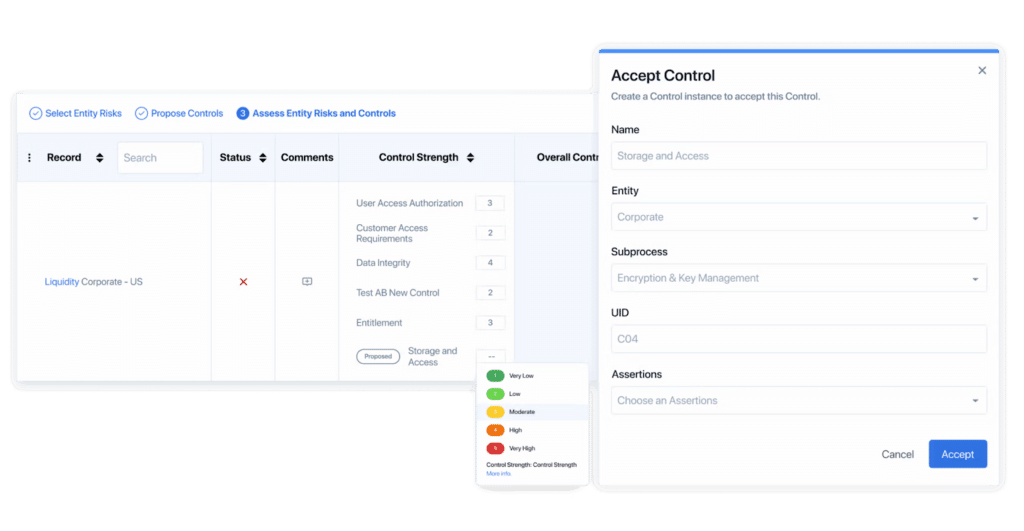
AuditBoard, which recently rebranded to Optro, is positioned as an AI-powered connected risk platform for organizations that want to centralize controls and oversight workflows in one system. In this roundup, we think it fits best as a large-scale, program-oriented GRC platform rather than a tool built primarily for enforcing least-privilege access in engineering workflows.
Main features:
- Regulatory and compliance coverage across frameworks.
- Enterprise and operational risk management with support for assessments and response planning.
- Risk-based auditing and SOX compliance assurance.
Best for: Audit- and controls-heavy enterprises that want to connect internal audit, SOX, compliance, and risk teams in one system.
Pricing: By inquiry.
Review: “The platform’s ability to manage compliance and track findings in one place saves significant time and reduces the chances of errors.”
Move From Audit Readiness to Continuous Enforcement
The best governance, risk, and compliance software does more than organize policies. In cloud-native environments, GRC has to work at the speed of CI/CD, which means the right platform should help reduce risk and automate enforcement. That is the real difference between documenting controls and actually operationalizing them as a continuous governance process instead of a periodic review cycle.
While traditional GRC platforms help teams track risk and demonstrate compliance, Apono helps enforce governance at the access layer with automated just-in-time access and self-serve access via Slack, Teams, or the CLI. For teams working toward continuous compliance and stronger zero trust enforcement, Apono adds the runtime control layer that broader GRC programs often miss. Apono is designed for fast deployment and low operational overhead.
Book a personalized demo to see how Apono brings governance into real-time access enforcement. Or, download the Buyer’s Guide to compare modern approaches to privileged access and identify the gaps traditional tools leave behind.