Apono is now part of 1Password, expanding secure access governance for the AI era

Read More

The Just-in-Time Access Management Platform for Humans and AI Agents

Give engineers, service accounts, and AI agents the access they need at the moment they need it, scoped to the task and nothing more. Apono, now part of 1Password, grants Just-in-Time, Just-Enough access in seconds and removes it automatically when the approved window ends.

Trusted by security, IAM, and DevOps teams

The standing privilege problem

Standing access and ticket queues put security and engineering at odds

Most teams pick one of two bad options. They hand out broad, always-on permissions so engineers don’t get blocked, or they make every request wait in a ticket queue. Both cost you.

Engineers wait on tickets instead of shipping

Access requests can sit for hours or days. That slows delivery, stretches incident recovery time by more than 50%, and teaches engineers to over-request access they’ll never give back.

Admins get stuck maintaining roles

Static roles can’t keep up with a cloud that changes every minute. Admins spend their week on role upkeep, ticket triage, and audit cleanup instead of security work that moves the needle.

Most standing access is never used

Up to 96% of standing privileges go unused. Each one widens the blast radius if an identity is compromised, whether it belongs to a person, a service account, or an AI agent.

Solution

Just-in-Time access that grants, scopes, and revokes on its own

Stop managing permissions by hand. Apono discovers the access you already have, replaces standing permissions with short, task-scoped grants, and keeps right-sizing what’s left. Engineers request access in the tools they already use.

Discover
Enforce
Improve

See who has access to what, and why

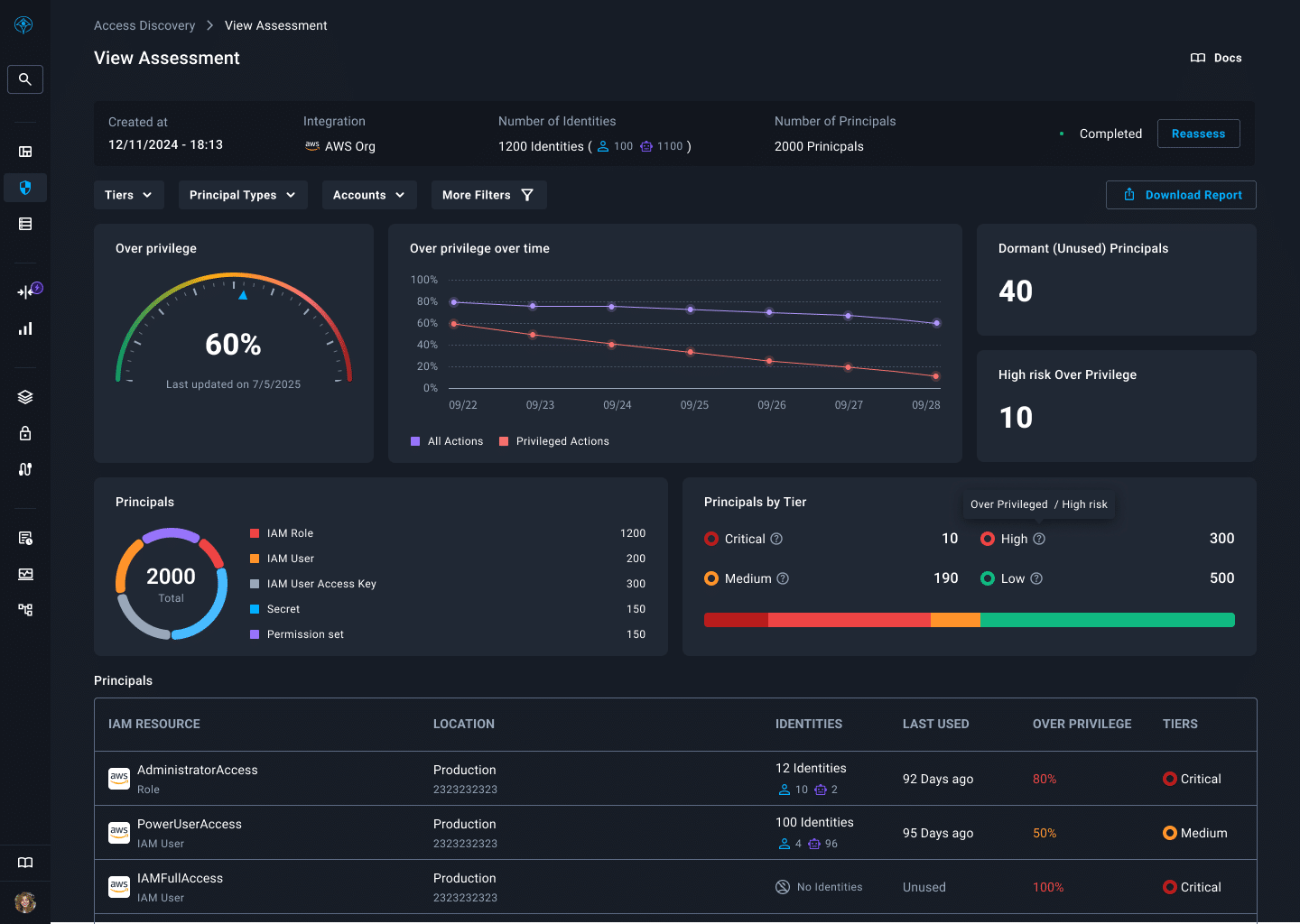
Access Discovery maps standing privileges, unused permissions, and dormant identities across AWS, Azure, GCP, Kubernetes, databases, and SaaS. Risk Scores show which entitlements carry the most risk, so you know where to start.

Enforce Just-in-Time, Just-Enough access

Access Flows define who can get access, to what, for which actions, for how long, and who approves. Apono creates the role at request time in each platform’s native policy language, then removes it when the window closes. Low-risk requests can auto-approve, while sensitive resources route to a human.

Keep shrinking access over time

Right-sizing recommendations turn broad access into just-enough permissions based on usage and resource context. Unused non-human identities get flagged so you can quarantine or remove them without breaking pipelines.

How it works

How Apono’s Just-in-Time access management platform works

Every JIT access request follows the same five steps, whether it comes from an engineer, a service account, or an AI agent.

01

Request

A user or AI agent asks for access in Slack, Microsoft Teams, the Apono CLI, the web portal, or an MCP-enabled AI tool through the Apono Assist MCP Server.

02

Evaluate

Apono checks the request against your Access Flow, using role, resource risk, and live context like on-call status.

03

Provision

Apono creates the exact permissions the task needs, natively in the target system. This is just-in-time provisioning, with no pre-built role library to maintain.

04

Work

The user or agent does the task with just-enough permissions and nothing broader.

05

Revoke

Access ends automatically when the window closes. Apono logs every request, approval, grant, and revocation.

Use cases

Just-in-Time privileged access for every team and identity

  • Production and break-glass

  • Databases

  • Kubernetes

  • Non-human identities

  • AI agents

  • Compliance

Just-in-Time access to production

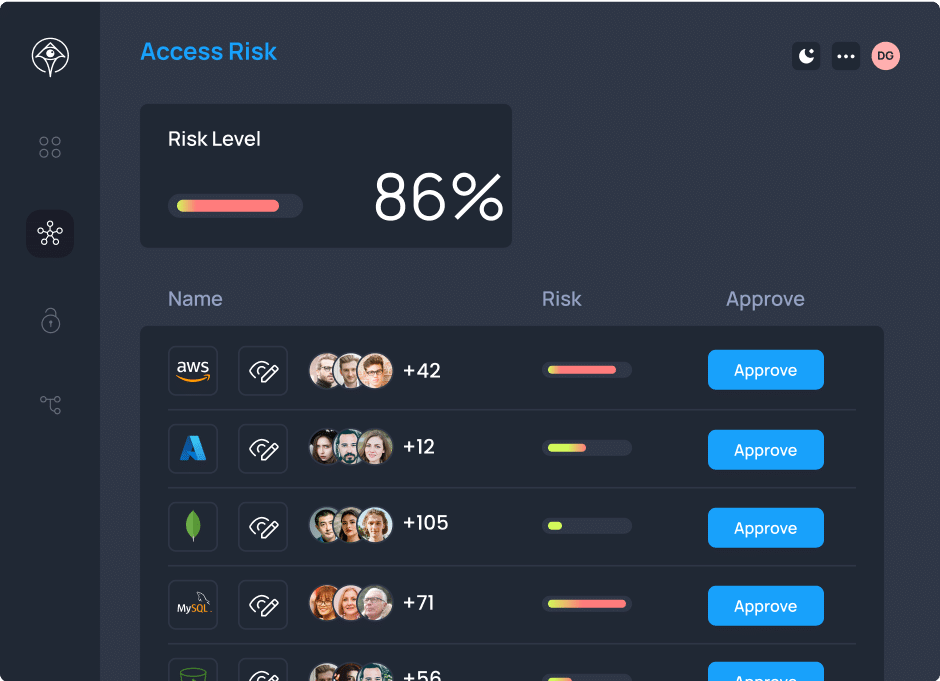
Engineers reach production without holding open-ended admin rights. On-call responders get scoped emergency access tied to an incident ticket, fully audited and automatically revoked when the approved access period expires. Faster response no longer leaves permanent admin rights behind.

Learn more about break-glass access
Just-in-Time access to production

Secure database access

Access Flows centralize permissions across PostgreSQL, MySQL, MongoDB, Snowflake, and more. Engineers get temporary, task-specific access to the tables they need instead of standing credentials.

Learn more about secure database access
Secure database access

Kubernetes access

Grant namespace-level access with custom RBAC roles that expire on schedule. Risk-based approvals keep low-risk requests moving and send sensitive clusters to a reviewer.

Learn more about Kubernetes integration
Kubernetes access

Non-human identities

Service accounts and tokens pile up long-lived permissions with no clear owner. Apono brings them under the same policy framework as people, flags overprivileged identities, and cleans up unused access without breaking pipelines.

Learn more about securing NHI
Non-human identities

AI agent access

Agents request access through the Apono Assist MCP Server. Your Access Flows set scope, duration, and approvals, and sensitive actions can require a human to sign off. Agents get commands or secure portal links, not long-lived keys. For deeper runtime controls, Apono Agent Privilege Guard adds Intent-Based Access Control (IBAC).

Learn more about Agent Privilege Guard
AI agent access

Audit and access reviews

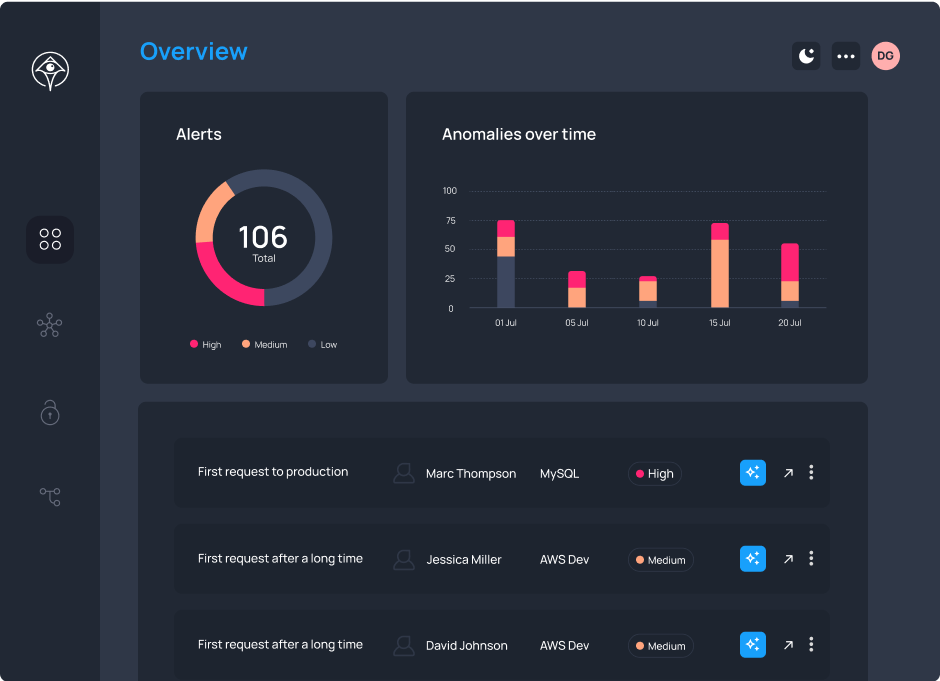
Apono logs every request, approval, grant, and revocation. Access review reports come straight from that record, which supports SOC 2, ISO 27001, HIPAA, PCI DSS, SOX, and GDPR programs.

Learn more about compliance access
Audit and access reviews

Governing cloud entitlements more broadly? See Cloud Privileged Access. Building toward always-off access? See Achieve Zero Standing Privileges.

How teams use Apono for Just-in-Time access

From 72 hours to 5 seconds for production RDS access

94% reduction in standing privileges SSO through AWS Identity Center Zero security incidents

“Apono brings security with DevOps speed.”

Yaron Blachman, CTO and CISO, OpenWeb
OpenWeb 400 employees
Learn more

98% smaller attack surface for Kubernetes

Custom RBAC roles for granular control Risk-based automated approvals Complete audit trail
Labelbox 200 employees
Learn more

Hours of manual access work removed every week

Granular GCP and F5 access Automated permission management Fits existing workflows
Cybereason 1,000+ employees
Learn more

Just-in-Time access across your whole stack

Apono connects through each platform’s native API, with more than 85 out-of-the-box integrations across AWS, Azure, GCP, Kubernetes, databases, and developer tools. Identity context flows in from Okta, Entra ID, OneLogin, or whichever provider you already run.

Integration Catalog

Apono vs. other approaches

Just-in-Time PAM vs. traditional approaches

Traditional PAM vaults shared admin accounts and leans on static roles. Manual processes lean on tickets. JIT PAM creates temporary, scoped permissions on demand and removes them after use.

Capability
Apono
Legacy PAM
Manual process
When access exists Only during an approved window, then revoked automatically Often standing roles or checked-out credentials Until someone remembers to remove it
How much access Scoped to the resource and action, like one table or namespace Usually role-level Whatever the ticket grants, often broad
How roles are built Created at request time, removed after use Pre-built static roles Pre-built static roles
Time to access Seconds for policy-approved requests Often slowed by ticket-based approvals Often hours or days
Where people request Slack, Teams, CLI, web portal, MCP-enabled AI tools Usually a separate portal Ticket system
Coverage Cloud, Kubernetes, databases, SaaS, service accounts, and AI agents in one policy plane Often split across modules Varies by team
Secrets handling Connector retrieves secrets from your secrets manager when needed, without caching or storing them Credentials vaulted inside the tool Shared or stored case by case
Right-sizing Built-in discovery and recommendations Often needs another tool None
Audit trail Every request, approval, grant, and revocation logged Varies by module

Just-in-Time access FAQs

What is a Just-in-Time access management platform?

A Just-in-Time access management platform grants access only when someone needs it, scopes it to the task, and removes it automatically when the window ends. Apono does this for people, service accounts, and AI agents, so access behaves like a short, governed event instead of a standing permission. JIT supports Zero Standing Privileges.

What's the difference between JIT and JEP?

Just-in-Time access controls when and how long someone has access. Just-Enough privilege controls how much that access can do. Apono applies both to every grant, so access is short-lived and narrowly scoped.

How is JIT privileged access management different from traditional PAM?

Traditional PAM usually vaults shared admin accounts and relies on static roles and proxies. JIT privileged access management creates temporary, scoped permissions on demand and removes them after use, so there's far less standing privileged access to protect. For cloud-specific controls, see cloud privileged access.

How fast are JIT access requests approved?

Policy-based approvals typically finish in seconds. Requests that need a person to approve them route straight to the right owner in Slack or Teams, without a ticket-queue wait.

Does Just-in-Time access create an audit trail?

Yes. Every request, approval, grant, and revocation is logged and available for access review reporting. That record supports SOC 2, HIPAA, and GDPR programs, because each grant becomes a short, traceable event.

Enforce Just-in-Time, Just-Enough access today

Give your engineers and AI agents fast access without leaving standing permissions behind. See how Apono grants Just-in-Time, Just-Enough access and removes it automatically, so you shrink your attack surface without slowing your team down.