Top 14 AI Governance Tools by Category

The Apono Team
July 23, 2026
Abstract
AI governance tools help organizations manage model risk, enforce compliance policies, and control what AI systems can do.
This article compares 14 top AI governance solutions:
- Apono Agent Privilege Guard
- Arcade.dev
- Credo AI
- Holistic AI
- Saidot
- Optro AI
- Modulos
- Knostic
- Lasso Security
- HiddenLayer
- Guardrails AI
- Check Point
- Patronus AI
- Galileo
In 2026, AI governance tools are an operational requirement for most enterprises integrating autonomous workflows into their systems.
If you’re deploying AI agents into production, your security and DevOps teams face a harder version of a familiar non-human identity (NHI) security problem: who authorized this access, what did the agent do, and was it supposed to be allowed to do so?
The risks are measurable. 13% of organizations surveyed by IBM in 2025 reported AI model or application breaches, and 97% of those admitted they lacked proper AI access controls.
What are AI governance solutions?
AI governance tools are platforms and frameworks that help you manage the risk, behavior, and accountability of AI systems throughout their lifecycle, from development through production monitoring and regulatory compliance.
Unlike ML observability pipelines, model training infrastructure, or data quality tooling, AI governance solutions focus on system-level accountability and control structures around AI models and agentic workflows.
AI governance is not a single control layer. In production environments, teams need tools that document policy, authorize access, limit data exposure, detect unsafe runtime behavior, evaluate model and agent outputs, and produce audit-ready evidence. That is why this comparison includes AI GRC platforms, agent access controls, runtime security tools, knowledge governance platforms, and LLM evaluation or observability tools.
AI governance also overlaps with identity and access management (IAM) when agents, copilots, or service accounts need permission to access cloud infrastructure, SaaS tools, or sensitive data.
For AI agents, governance also depends on the quality of the data and business logic they use; a data lake alone doesn’t create an AI-ready context layer for trustworthy decisions.
Top Picks at a Glance
- Recommended for AI agent access control, just-in-time access, and Zero Standing Privilege across agentic pipelines: Apono Agent Privilege Guard
- Recommended for enterprise-wide AI policy governance and regulatory compliance documentation: Credo AI
- Recommended for enforcing need-to-know access limits inside enterprise AI tools: Knostic
- Recommended for runtime AI threat detection, prompt injection protection, and automated red-teaming: Check Point AI Security
- Recommended for production LLM observability, hallucination detection, and evaluation pipelines: Galileo
Comparison Table: Best AI Governance Tools Compared
| AI Governance Tool Name | Best for | Key strength | Key limitation | Key integrations |
| Apono Agent Privilege Guard | DevOps and platform security teams managing AI agent identities | Zero Standing Privilege with ephemeral JIT permissions scoped to individual tasks | Not a model observability or AI GRC platform; focused on runtime privilege and access governance | Slack, Teams, AWS, Azure, GCP, GitHub, Okta (200+) |
| Arcade.dev | Platform teams building multi-agent systems that call external services | OAuth token injection into agent execution loops | Developer-centric runtime tool | LangChain, CrewAI, Pydantic AI, 7,500+ MCP tools |
| Credo AI | Enterprise compliance and risk teams prioritizing regulatory alignment | Pre-built policy packs for common frameworks with AI asset registry and shadow AI discovery | Policy and compliance layer only; no runtime enforcement capabilities | AWS, Azure, GCP, Databricks, Workday |
| Holistic AI | Data science and technical risk teams in finance and healthcare | Automated bias testing and audit-ready evidence generation | May require more setup and governance maturity than lighter-weight point solutions. | AWS, Azure, GitHub, Databricks |
| Saidot | Public sector organizations and EU-centric enterprises | Native EU AI Act compliance | Narrower regulatory breadth than other GRC tools | Microsoft Azure AI Foundry (REST API) |
| Optro (by AuditBoard) | Large enterprises already operating within the AuditBoard GRC ecosystem | AI governance integrated into a broader GRC suite | Not a standalone AI governance tool | Bundled AuditBoard integrations |
| Modulos | EU-headquartered enterprises in finance, defense, and telecom industries | Governance Graph with monetary risk quantification | May require more implementation planning than narrower point solutions. | Custom integrations |
| Knostic | Enterprises managing LLM oversharing risk across knowledge workers | Inference-time need-to-know enforcement with AI Readiness Scores by role and business unit | Focused on knowledge layer only | Microsoft Copilot for M365, Glean |
| Lasso Security | Engineering and security teams securing autonomous agent integrations | Intent Security Framework with catalogued attack techniques and near real time enforcement | No deep role-based access control mapping | MCP-compatible agentic pipelines |
| Check Point AI Security | Enterprise AI/ML teams operationalizing AI threat defense at production scale | Sub-50ms runtime guardrails and 100+ language support | Offensive testing and guardrails focus | AWS Bedrock, Azure OpenAI, OpenAI, Anthropic, Google AI, and Zapier |
| HiddenLayer | CISOs and security engineers focused on model supply chain integrity | AI-BOMs across 35+ model formats; MITRE ATLAS-aligned runtime defense | Addresses supply chain dimension only | MITRE ATLAS framework; 35+ ML model formats |
| Guardrails AI | Developers building LLM applications with fine-grained output control | Open-source validators via Guardrails Hub | Integration requires developer effort | Python, LangChain, Guardrails Hub (70+ validators) |
| Patronus AI | AI/ML teams running structured safety evaluation and regression testing | Purpose-built hallucination detection and agent workflow debugging | Testing point-solution only | Custom API integrations into LLM evaluation pipelines |
| Galileo | AI teams needing production LLM monitoring and evaluation | Hallucination detection; Agent Protect layer | Observability focus only | Standard LLM providers |
Top 14 AI Governance Tools by Category
Category 1: AI Agent Access and Authorization Governance
1. Apono Agent Privilege Guard
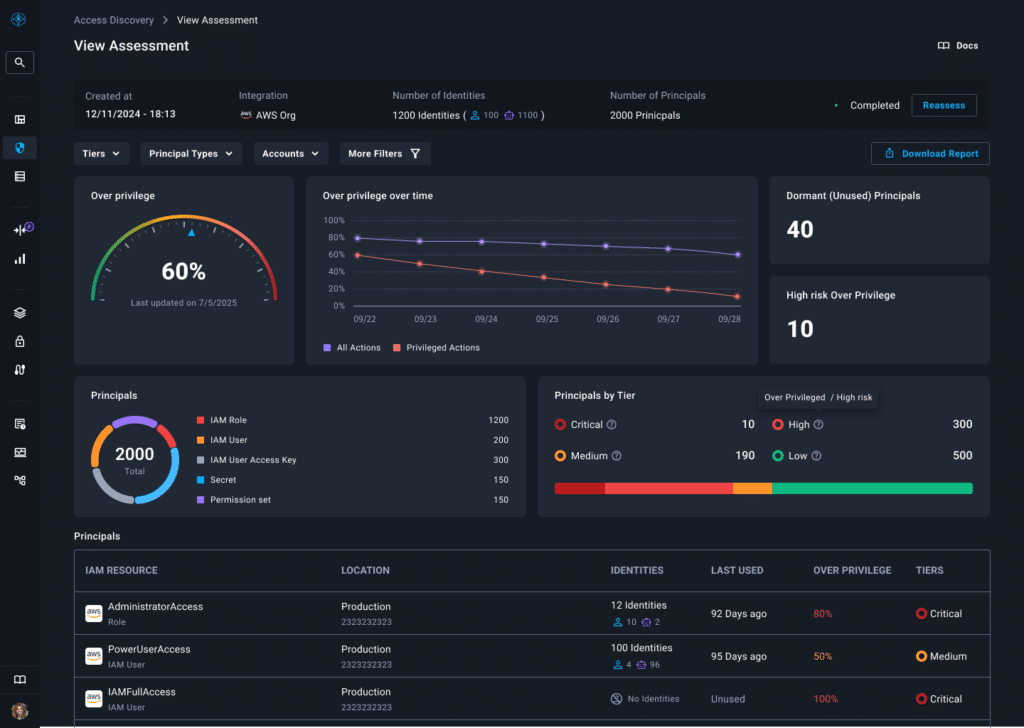
Apono Agent Privilege Guard is a cloud-native privileged access management solution built on Zero Standing Privilege principles for human and agentic identities. Instead of granting AI agents standing admin access or relying on predefined static roles, Apono creates ephemeral, task-scoped privileges at request time and automatically revokes them when the task is complete.
This matters because AI agents are a fast-growing class of non-human identities that can inherit broad access, reuse stale credentials, or act beyond their intended tasks without proper privilege controls.
Key features:
- Intent-Based Access Control (IBAC)
- Zero Standing Privilege enforcement
- Approval workflows via Slack and Teams
- A full audit trail across 200+ integrations
Recommended for: Securing AI agent privileges across cloud-native environments.
Pricing: By inquiry.
2. Arcade.dev
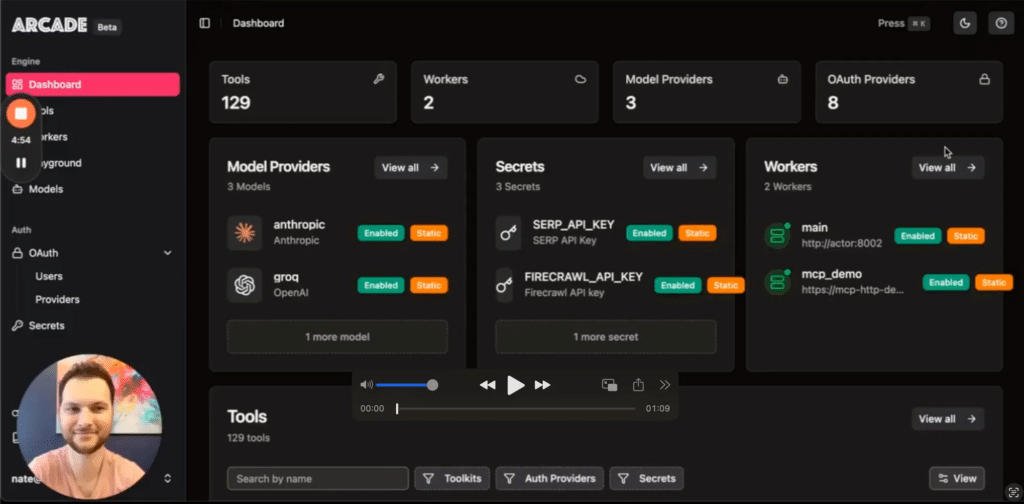
An API gateway and authorization broker built for AI agents interacting with external apps. Lacks broader GRC policy mapping; operates strictly as a developer-centric runtime authorization layer.
Key features:
- Injects user-authorized OAuth tokens into execution loops at runtime, ensuring that every action is scoped and auditable
- Supports 8,000+ MCP tools
- Integrates natively with LangChain, CrewAI, and Pydantic AI
Recommended for: Building multi-agent systems with external services.
Pricing: Free Hobby plan available. Growth: $25/month plus usage. Enterprise: custom pricing.
Category 2: AI Governance Platforms and Systems of Record
3. Credo AI
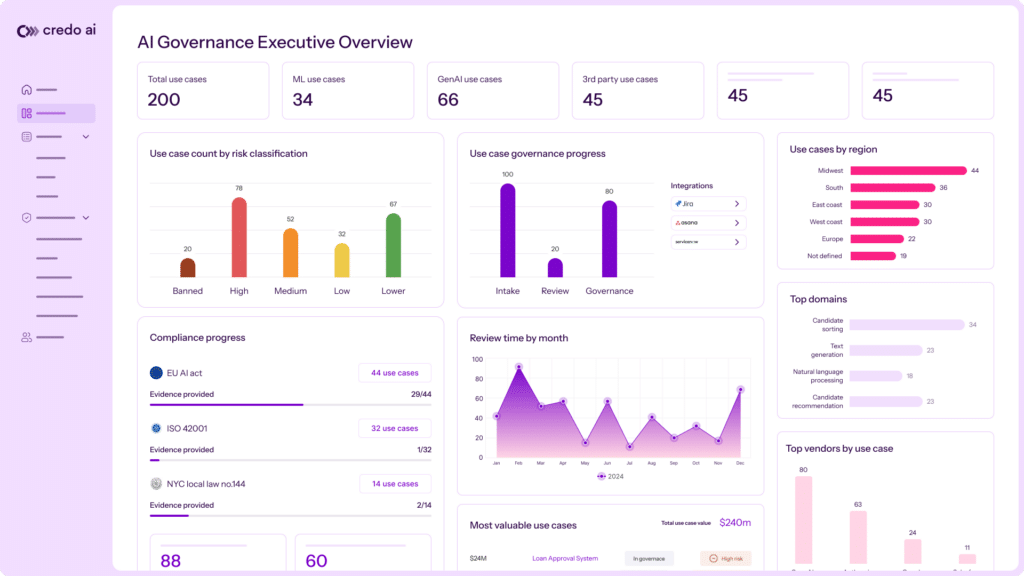
Credo AI is primarily a governance, policy, risk, and compliance platform; it should not be treated as a replacement for runtime access controls or AI security guardrails. It extends governance to multi-agent systems but operates at the policy level, lacking runtime enforcement capabilities.
Key features:
- AI asset registry
- Shadow AI discovery
- Continuous monitoring
- Pre-built policy packs for the EU AI Act, NIST AI RMF, and ISO 42001
Recommended for: Compliance and risk teams at large enterprises prioritizing regulatory alignment.
Pricing: By inquiry.
4. Holistic AI
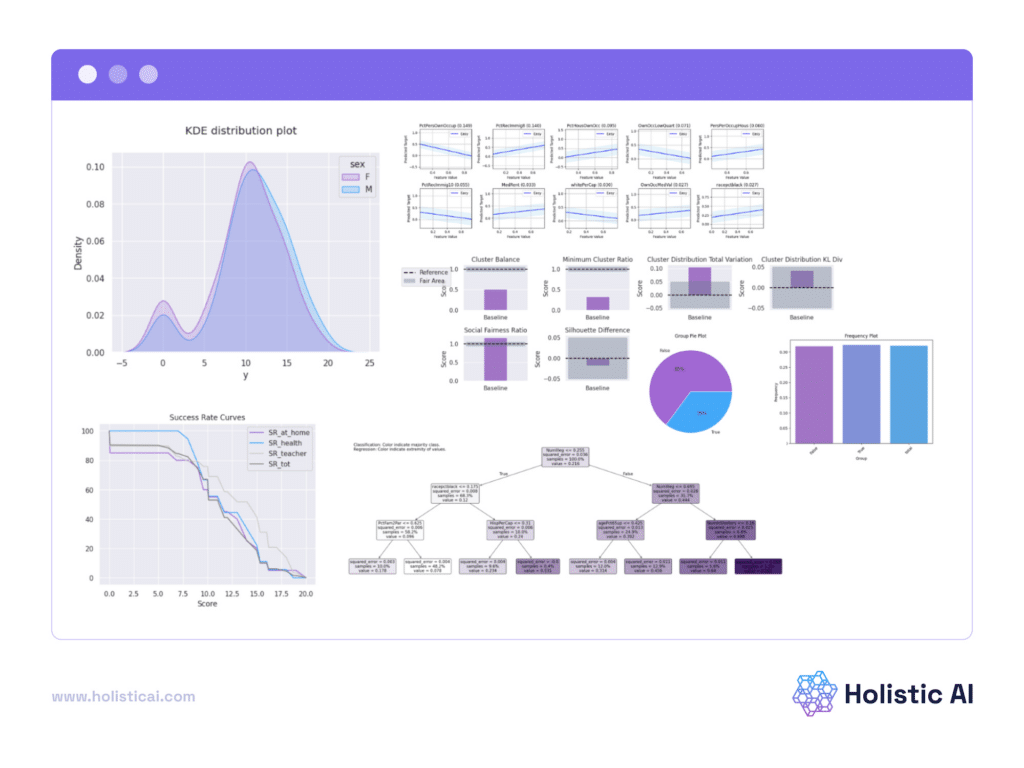
Holistic is a technical assurance platform focused on algorithmic auditing, bias testing, and shadow AI discovery.
Key Features:
- Automated fairness certification
- Robustness testing
- Continuous risk monitoring across the AI lifecycle
- Integrates with AWS, Azure, GitHub, and Databricks
- Generates audit-ready documentation for regulated environments
Recommended for: Data science and technical risk teams in finance and healthcare.
Pricing: By inquiry.
5. Saidot
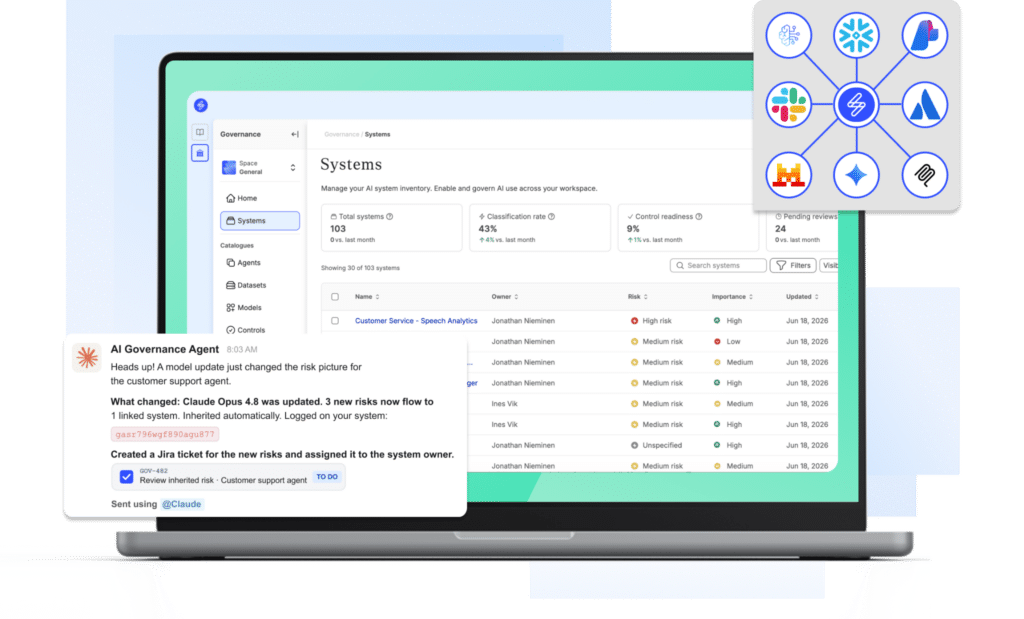
Saidot is a knowledge-graph AI governance platform mapping 260+ AI risks to 620+ controls and 110+ regulatory policies. Saidot is especially strong for AI-specific and EU-oriented governance, rather than broad enterprise GRC coverage.
Key features:
- AI system and agent catalog
- Automated compliance workflows
- Microsoft Azure AI Foundry integration via REST API
Recommended for: Public sector organizations and EU-focused enterprises.
Pricing: From $1,638/month per organization.
6. Optro (by AuditBoard)
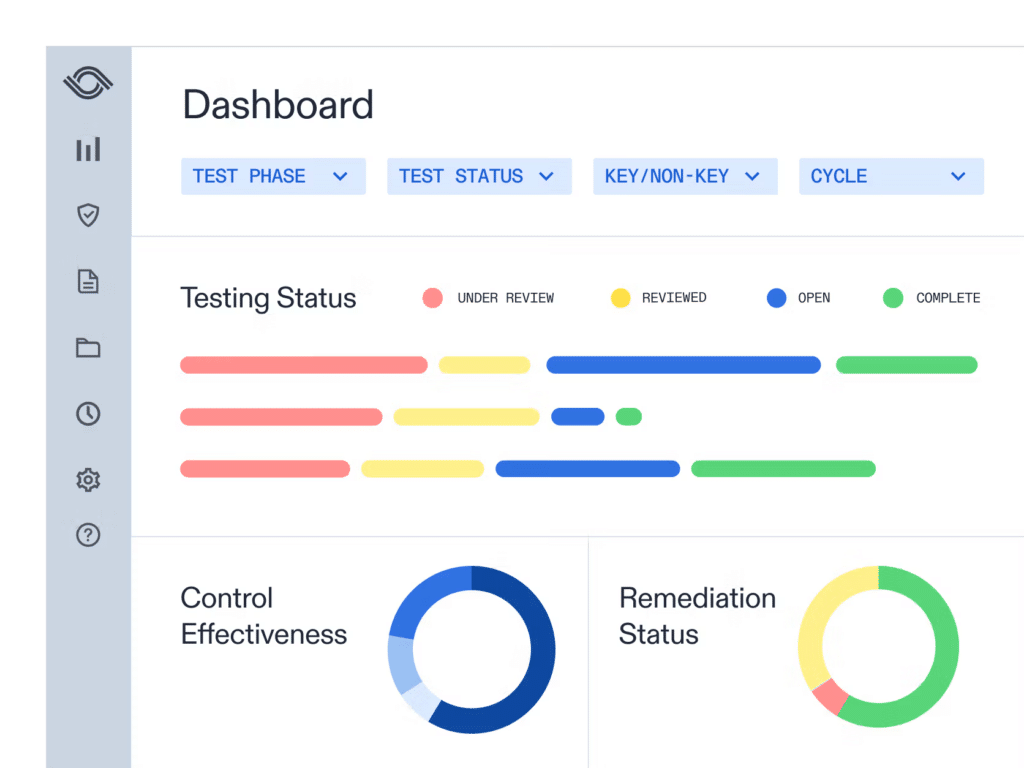
Optro is an agentic GRC platform that integrates AI governance into AuditBoard’s broader compliance suite, following the acquisition of AI governance startup FairNow. Requires adopting the broader AuditBoard ecosystem rather than a standalone AI governance tool.
Key features:
- AI model inventory
- Intake workflows
- Risk scoring
- Compliance automation across 25+ frameworks, including the EU AI Act, NIST AI RMF, and ISO 42001.
- Unified with AuditBoard’s audit, risk, and infosec capabilities
Recommended for: Large enterprises already operating within AuditBoard.
Pricing: By inquiry.
7. Modulos
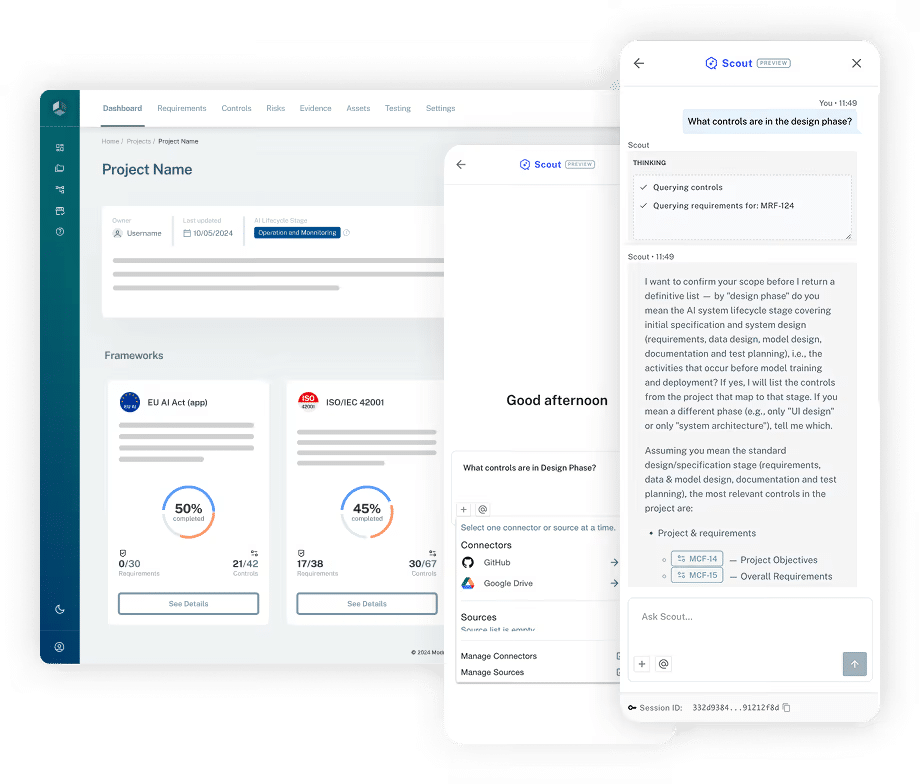
Modulos is an ISO/IEC 42001-certified AI governance platform structured around a Governance Graph that connects frameworks, controls, and evidence into a unified view.
Key features:
- Cross-framework control deduplication
- Monetary risk quantification to prioritize remediation efforts
- Has ISO 42001 certification
Recommended for: EU-headquartered enterprises in highly regulated industries.
Pricing: By inquiry.
Category 3: AI Data Exposure and Knowledge Access Governance
8. Knostic
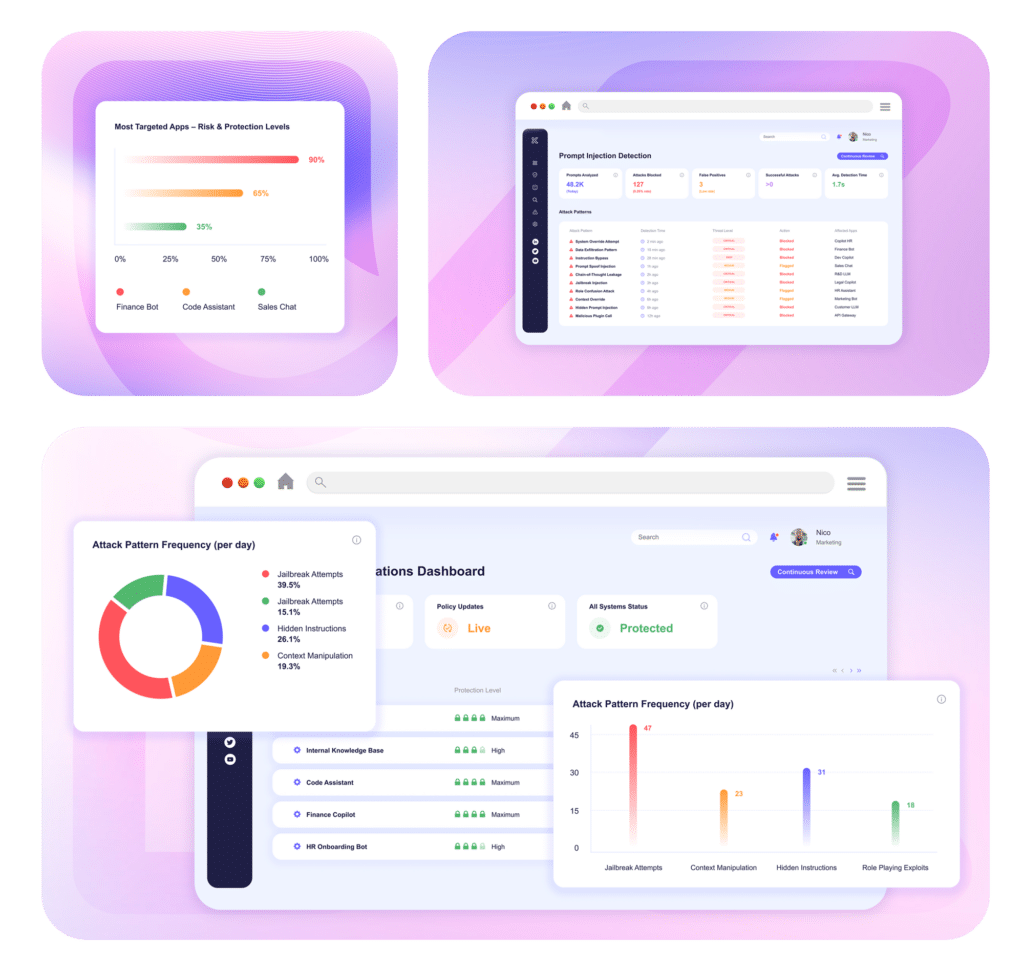
Knostic is an enterprise knowledge security platform that enforces need-to-know access controls at the inference layer of AI tools.
Key features:
- Intercepts sensitive data exposures in real time across enterprise AI deployments
- Support for Microsoft Copilot for M365 and Glean
- Identity- and role-aware policies aligned with existing organizational permissions
- Generates AI Readiness Scores (0–100) by role and business unit to surface and quantify oversharing risk before it reaches production
Recommended for: Managing LLM knowledge access risks at scale.
Pricing: $50,000 for a 12-month contract, with additional usage listed at $0.01.
Category 4: Runtime AI Security and Guardrails
9. Lasso Security
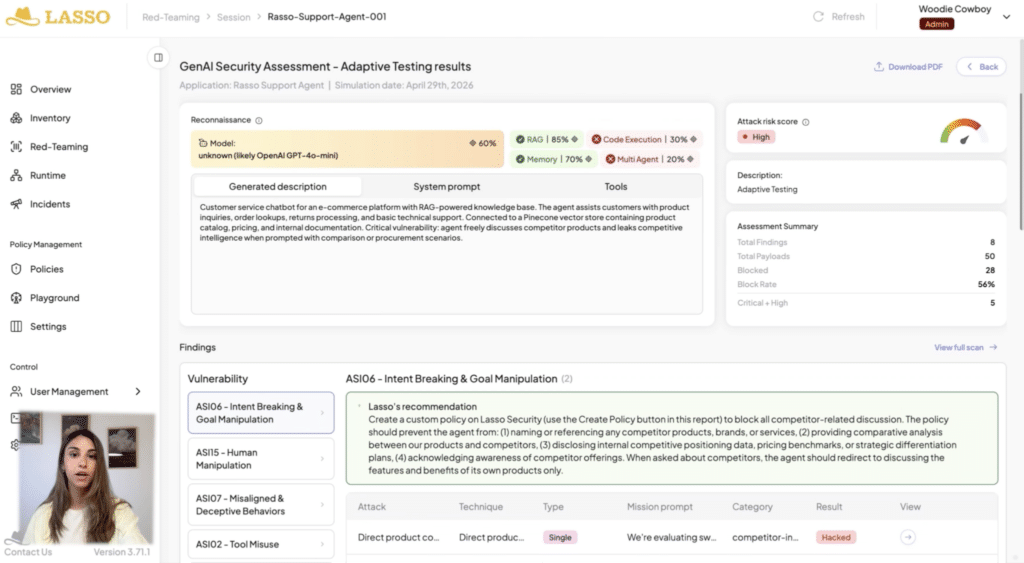
Lasso Security operates primarily as a GenAI security platform and is built around five operational pillars: Discover, Assess, Test, Enforce, and Protect. This solution helps teams monitor and constrain AI agents’ behaviour across autonomous workflows.
Key features:
- Intent Security Framework to analyze and constrain agent behavior at runtime
- Reports sub-50ms enforcement decisions
- 3,000+ catalogued attack techniques
Recommended for: Visibility into autonomous agent behavior.
Pricing: By inquiry.
10. Check Point AI Security
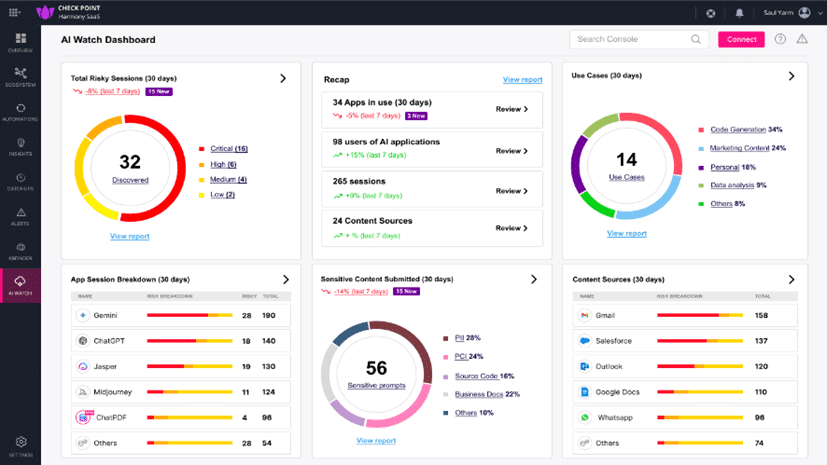
Following its acquisition of Lakera in September 2025, Check Point’s AI Defense Plane is now integrated into the Check Point Infinity portfolio. Check Point focuses on autonomous agent security, including runtime threat detection and guardrails.
Key features:
- Runtime protection
- Automated red-teaming
- Guardrails against prompt injection and data leakage
- Support for 100+ languages at sub-50ms latency
- Lakera’s Gandalf red-teaming platform, which is trained on over 80 million adversarial prompts
Recommended for: Operationalizing AI threat defense at scale.
Pricing: By inquiry.
11. HiddenLayer
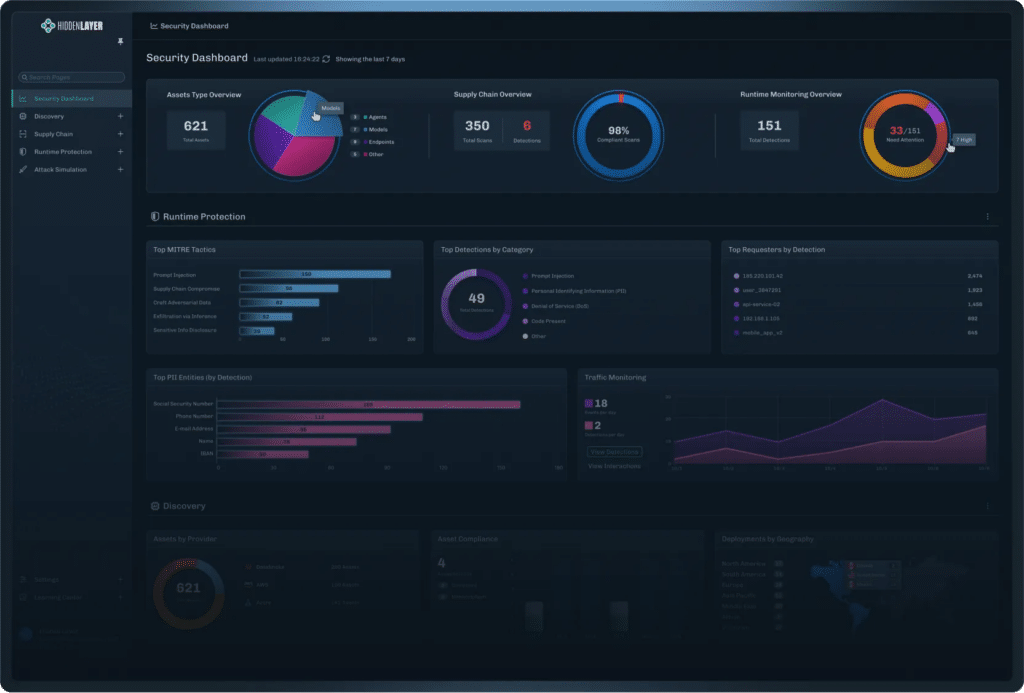
HiddenLayer is an AI supply chain security platform that protects ML systems from model-level threats. It addresses a narrower dimension of AI governance than full GRC platforms, and has published research on vulnerabilities across AI ecosystems.
Key features:
- Scans 35+ model formats for supply chain compromise
- Generates AI Bills of Materials (AI-BOMs)
- Monitors runtime behavior for version drift and adversarial attacks, and aligns to the MITRE ATLAS framework
Recommended for: Model provenance and supply chain integrity.
Pricing: By inquiry.
12. Guardrails AI
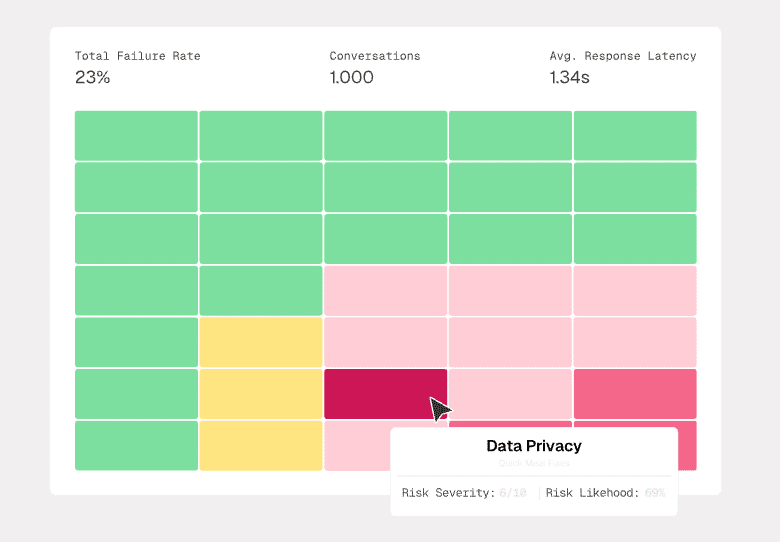
Guardrails AI is an open-source Python framework for embedding programmable safety validators directly into LLM applications. Designed for code-level integration rather than gateway-level deployment, requiring meaningful developer effort to implement.
Key features:
- Pre-built validators via the Guardrails Hub, covering hallucination detection, PII filtering, and structured output enforcement
- A managed Guardrails Pro tier is available for teams needing hosted validation
Recommended for: Building conversational AI applications with fine-grained output control.
Pricing: Open-source framework is free. Guardrails Pro is listed on AWS Marketplace at $50,000 for a 12-month contract.
Category 5: Evaluation, Observability, and Assurance Evidence
13. Patronus AI
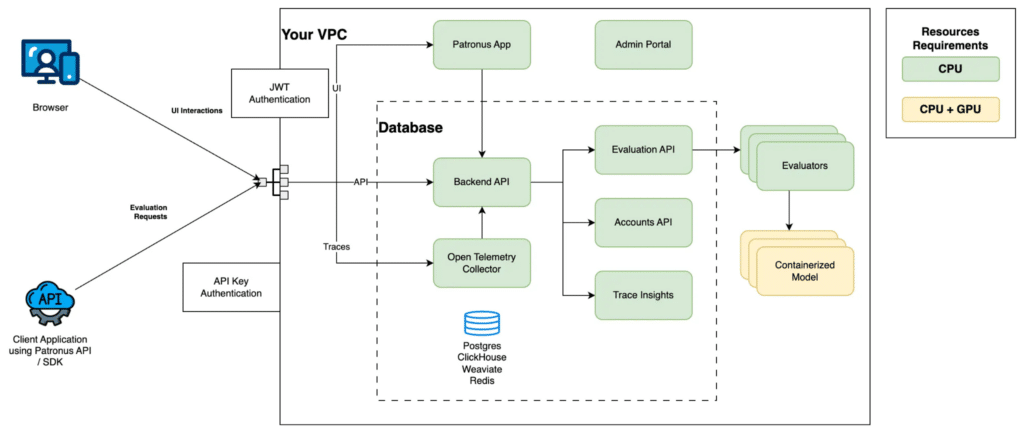
Patronus is an automated LLM evaluation and adversarial testing platform with customizable evaluators, scenario libraries, and pre-built benchmarks. Operates strictly as a testing point solution without compliance mapping or inventory management.
Key features:
- Lynx is a purpose-built hallucination detection model
- The GLIDER general-purpose LLM judge for multi-dimensional scoring
- Percival for agent workflow debugging
Recommended for: Structured safety evaluation and regression testing.
Pricing: By inquiry.
14. Galileo
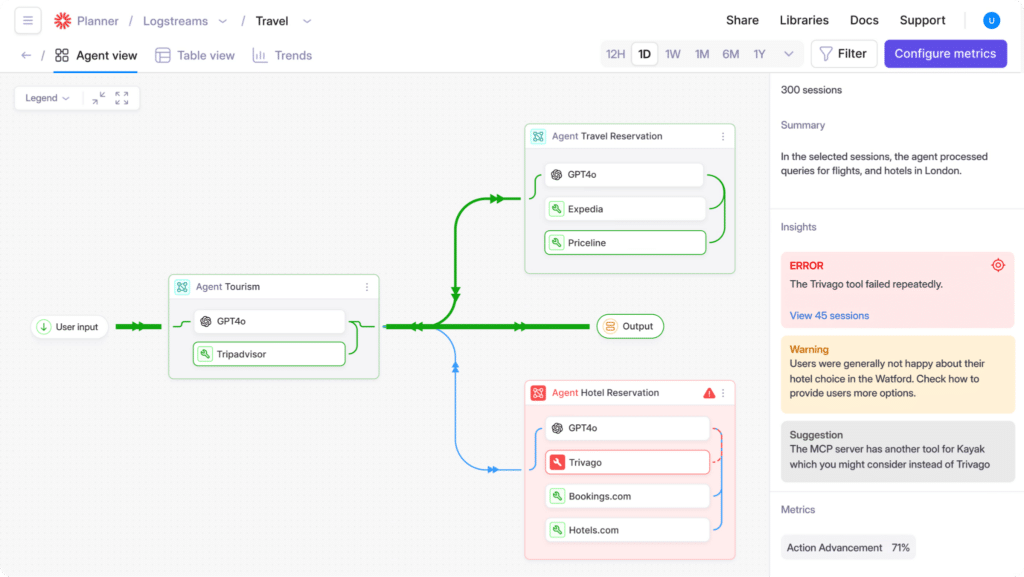
Galileo is primarily an AI evaluation and observability platform, with runtime guardrail capabilities through Galileo Protect.
Key features:
- 20+ out-of-box metrics
- Agent Protect runtime guardrail layer
- End-to-end pipeline from evaluation to production monitoring
- SOC 2 Type II certified
Recommended for: LLM monitoring.
Pricing: Ranging from a free trial to $100/month.
How We Compared These Tools
We evaluated these tools using consistent criteria based on publicly available information as of June 2026, including official documentation, feature pages, pricing details, release notes, compliance certifications, and credible third-party coverage. We did not conduct hands-on testing of every tool. Where a capability was not clearly documented or where coverage conflicted, we avoided strong claims.
What we reviewed:
- Vendor documentation, feature pages, and implementation guides
- Pricing pages and plan limits, or packaging notes where pricing is not public
- Security and compliance materials and certifications
How we compared tools:
The criteria we considered include core capabilities, coverage depth, ease of adoption, integration breadth, and overall fit for DevOps and platform engineers deploying AI in production in enterprises.
We grouped the tools into five categories because AI governance is not a single control layer:
- Agent access and authorization tools were assessed on task-scoped permissions, identity context, approval workflows, and auditability.
- AI governance platforms and systems of record were evaluated for policy management, risk mapping, regulatory coverage, asset inventories, and reporting.
- Knowledge access governance tools were assessed on their ability to prevent oversharing, enforce need-to-know access, and align AI responses with existing identity permissions.
- Runtime security and guardrail tools were compared based on prompt injection defense, data leakage controls, threat detection, red-teaming, latency, and enforcement depth.
- Evaluation, observability, and assurance tools were reviewed for testing workflows, hallucination detection, monitoring, regression analysis, and evidence generation for production AI systems.
AI Governance Starts at the Access Layer
The tools in this list address real and distinct problems. Compliance platforms help you document, audit, and certify. Runtime guardrails detect and block threats in real time. Evaluation frameworks catch model failures before they reach production. Each category matters. And, depending on your environment, you may need solutions from more than one.
But there is a layer that policy documents and model monitoring cannot reach: the moment an AI agent acts. Who authorized that action? On what scope? With what credentials? Did the access end when the task did? For most organizations deploying agentic AI today, the honest answer is: we don’t know. That is a governance failure, not a monitoring gap.
The next phase of AI governance is access governance. Not just what the model is permitted to do in principle, but what it actually accessed, with whose authority, scoped to what task, and for how long.
That is the problem Apono was built to solve. Apono enforces just-in-time, just-enough access for human and agentic identities by creating ephemeral, task-scoped privileges at request time and revoking them automatically when the work is complete. No standing privileges. No credential sprawl. A complete audit trail of every resource any agent or user touched, and why.
Book a live demo to see how Apono helps security and DevOps teams enforce just-in-time, just-enough access for human and agentic identities, eliminate standing privileges, and create a complete audit trail of who or what accessed each resource, when, and why.