A2A vs MCP: Which Is More Secure?

The Apono Team
May 28, 2026
Two protocols are shaping the AI revolution: A2A for agent-to-agent delegation, and MCP for agent access to tools and external systems. A2A expands who can participate in a workflow by enabling agent-to-agent delegation. MCP expands what agents can reach by connecting them to data and systems.
By the end of 2026, task-specific AI agents are expected to appear in 40% of enterprise applications, up from less than 5% in 2025. That shift changes where security has to live. Controls that once sat around the application now need to travel with the task as it moves from a user to an agent, from one agent to another, and from an agent into a business system.
AI Agents in the enterprise are a certainty at this point. The real question is whether you can enforce agent access control at runtime based on the requesting identity, the current task, the target system, the requested action, and the allowed duration. Neither protocol is inherently more secure, and A2A and MCP introduce different risks.
A2A Structures the Agent-to-Agent Handoff, But Not the Business Decision
A2A, or Agent2Agent, is an open standard for communication and interoperability between independent AI agent systems. Its purpose is to let agents discover each other, exchange context, collaborate, and delegate work across multi-agent workflows.
A2A is not trying to replace how agents access tools or data; that is the role of the MCP protocol. It is focused on how agents coordinate with each other to complete work across multiple systems.
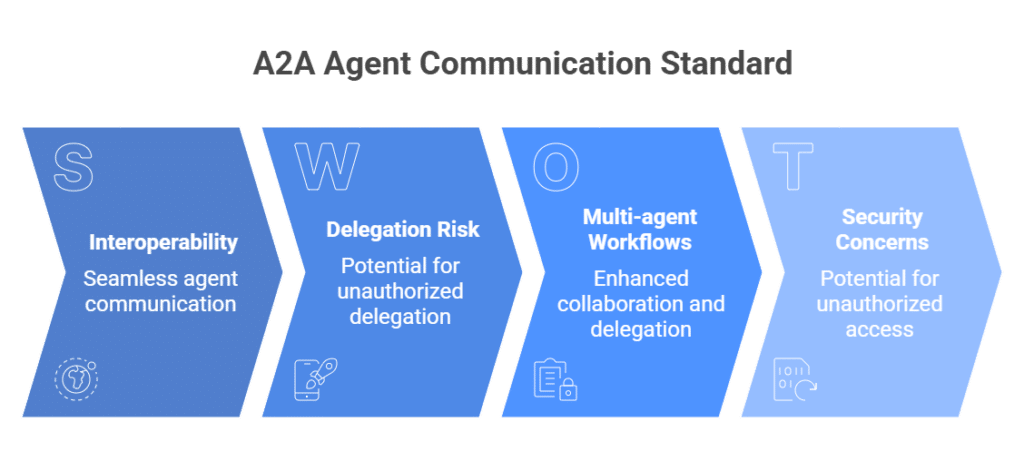
As such, the answer is not that A2A is more secure than MCP, or that MCP is more secure than A2A. They create different trust boundaries. A2A creates delegation risk: should this agent be allowed to pass work, context, or authority to another agent?
MCP Standardizes Tool Access, But Scope Still Matters
MCP (Model Context Protocol) is a protocol for connecting AI applications and agents to tools, data, prompts, and external systems. It defines how agents access capabilities in a consistent way, instead of relying on custom integrations for each service.
Where A2A is about delegation between agents, MCP is about access to capabilities. If an agent needs to call an API or pull context from an external source, MCP is the layer that standardizes that connection. That makes API security a critical part of MCP governance, because the API is often where an agent’s request turns into real data access or downstream action.
MCP includes authorization guidance for HTTP-based transports and follows OAuth-based conventions, but it does not choose an enterprise’s identity model, permission boundaries, approval rules, or runtime enforcement logic.
When authorization is supported, HTTP-based MCP implementations should follow the MCP authorization specification. STDIO-based implementations work differently and should retrieve credentials from the local environment.
That makes MCP security highly dependent on implementation. A well-scoped MCP implementation can limit an agent to one approved operation. A poorly scoped connection can give the same agent broad read or administrative access behind a single tool.
MCP creates tool-action risk: should this agent be allowed to use this tool against this resource for this operation right now? When both protocols are used together, the risk becomes a chain-of-authority risk. A task can start with a human request, pass through multiple agents, and end with a tool call to a sensitive system. Every step needs its own authorization decision.
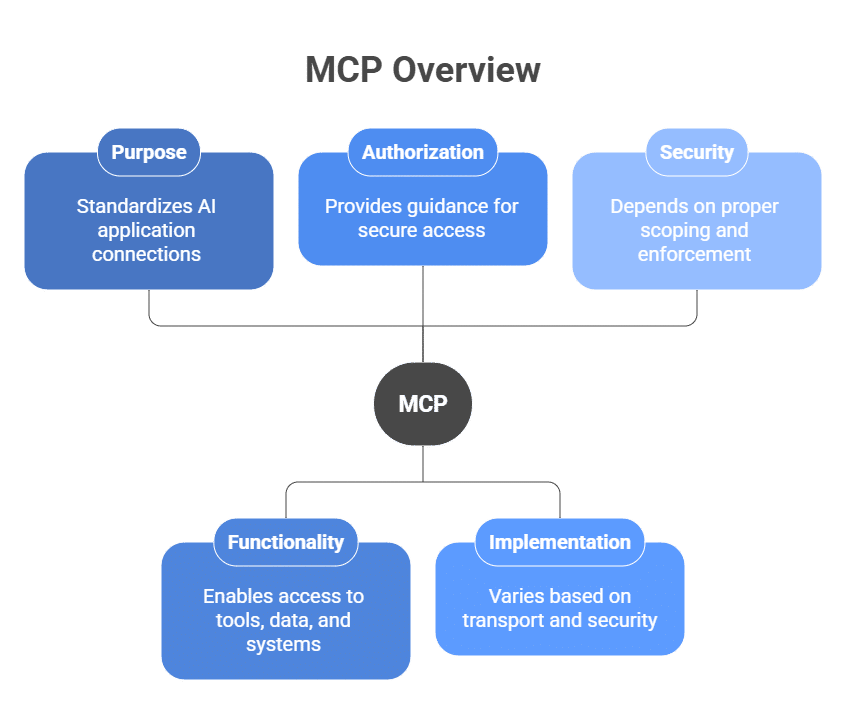
Table 1: Where A2A and MCP Create Different Access Questions
| Control dimension | A2A key question | MCP key question |
| Origin | Who initiated the task? | Which tool is being called? |
| Boundary | Which agent is receiving the task? | Which resource is being accessed? |
| Context | What context is being passed? | Is the action read-only, write-level, or destructive? |
| Authority | What authority is being delegated? | What token or credential is being used? |
| Propagation / expiry | Can the receiving agent delegate again? | When does that access expire? |
Most Enterprises Will Use A2A and MCP Together
Most enterprises will not choose between A2A and MCP because one looks safer than the other. As agent workflows become more operational, teams will need a way to coordinate with other agents and a way to act on systems.
They solve different problems and will often appear in the same workflow. A2A lets agents divide work across a multi-agent AI system. MCP lets those agents retrieve context, call APIs, and act on external systems. For example:
- A user asks an agent to complete a task.
- That agent delegates part of the task to another agent through A2A.
- The downstream agent then uses MCP to call a tool, retrieve context, or act against a business system.
The original request may be legitimate, but the downstream action can still be too broad or too privileged. Security teams need to preserve the full chain: initiating user, initiating agent, delegated agent, tool call, target resource, action, approval, and expiry.
Without that provenance, teams may know that an agent performed an action, but not which user, workflow, approval, or delegated step caused it. This is where the agentic identity crisis starts: you gain more automated actors, but less clarity into who or what is responsible for each action.
When these protocols are layered, the blast radius grows. The risk is not limited to one agent with excess access. The risk is delegation, identity, tokens, scopes, and approvals compounding across layers.
The Core Security Differences Between Agent Delegation and Tool Connectivity
A2A changes the trust boundary between agents. When one agent delegates part of a task, it can pass along context and implied authority to the next agent in the chain. That means access and decision-making are no longer contained within the first agent.
Should the second agent be allowed to handle the request at all? If it can, teams then need to decide how much context to provide and whether it can continue the chain by delegating to another agent.
MCP changes the trust boundary between an agent and a system. Once an agent can call a tool, the risk comes down to what that connection allows. This becomes even more important when agents interact with third-party tools or vendor-managed systems, where access decisions can introduce broader third-party risk monitoring challenges.
If the permissions are too broad, the agent can access data or make changes beyond the original task. The issue is the scope of access behind the connection.
Consider a support agent connected to billing through MCP. A customer asks for a refund on one failed order. If the MCP connection uses a broad billing token, the agent may be able to refund other orders, change account balances, issue credits, or read unrelated billing records. MCP gives the agent a path into the system, but the permissions behind that path decide how much damage or overreach is possible.
The MCP connection did not create the business risk on its own. The risk came from giving the agent a reusable credential with more authority than the task required.
The Protocol Debate Misses the Real Problem
The protocol comparison is secondary to this conversation. In today’s cyber threat landscape, production security depends less on which protocol an enterprise chooses and more on its ability to govern both protocols at runtime.
Without that control, the blast radius can expand quickly. An agent handling a code change request may delegate validation to another agent through A2A. That downstream agent then uses MCP to interact with the CI/CD system through a token that also allows deployments. A simple review task turns into an unapproved production change because the downstream agent had too broad access.
To guard against this, every agent action must be treated as a runtime authorization event. An agent should not inherit broad access because it belongs to a trusted workflow. It should receive a permission grant that is narrow, task-specific, and time-bound. That grant should be tied to the:
- Current task
- Requesting identity
- Acting agent
- Delegation path
- Target system
- Action being attempted
- Access duration
For A2A, delegated work needs a bounded authority envelope. If Agent A sends a task to Agent B, the handoff should include clear limits on what context can be shared, what Agent B can decide, and whether Agent B can delegate again. The receiving agent should not automatically inherit the full authority of the initiating agent or substitute its own broader access.
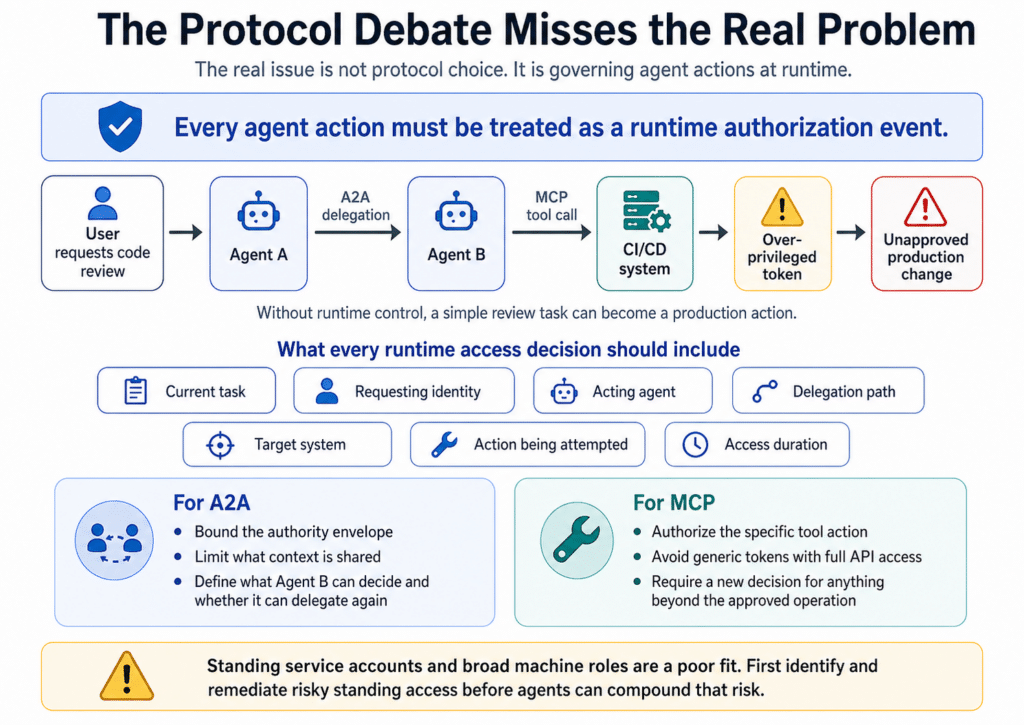
For MCP, the same model applies at the tool boundary. A tool call should not run through a generic token with full API access. The call should be authorized against the specific operation being requested, such as reading one ticket, updating one record, or triggering one approved workflow. Anything beyond that needs a separate authorization decision.
Static access models built on standing service accounts and broad machine roles are a poor fit here. Teams first need to identify where risky standing access exists, then reduce or remediate it before agents can compound that risk.
The Real Control Point Is Runtime Access
Runtime enforcement is critical, regardless of protocol choice. Some organizations may rely more heavily on A2A or MCP, but the access problem does not change. Agent systems need narrow, temporary controls tied to the task being performed. That applies across human and agentic identities as well as non-human identity management.
Agent security now looks like modern privileged access management. The goal is not to block agents or slow developers down. It is to make sure each action receives only the access it needs, only when it needs it, with a clear record of who or what initiated it.
A stronger model is dynamic least privilege: just-in-time, just-enough access, in which the agent receives only the permissions needed for the current action and loses them once the action is complete. Apono helps cloud-native teams automate that model across human, non-human, and agentic identities, so permissions are scoped, approved, observable, and automatically revoked.See how to secure AI agents with dynamic, just-in-time access. Alternatively, explore the Agent Privilege Lab.