
15 Best Zero Trust Network Security Tools [By Category]

The Apono Team
May 21, 2026
![15 Best Zero Trust Network Security Tools [By Category] post thumbnail](https://www.apono.io/wp-content/uploads/fly-images/22055/15-Best-Zero-Trust-Network-Security-Tools-By-Category-V1-1230x644.png)
Trust is expensive. The wrong zero trust network security tool can leave you with more standing access and more risk than you started with.
In today’s modern and complex environments, this sentiment matters more than ever. 22% of breaches involved credential abuse as the initial access vector.
In this guide, we break down the best zero trust network security tools by category, helping you choose the optimal solution for your requirements.
What are zero trust network security tools?
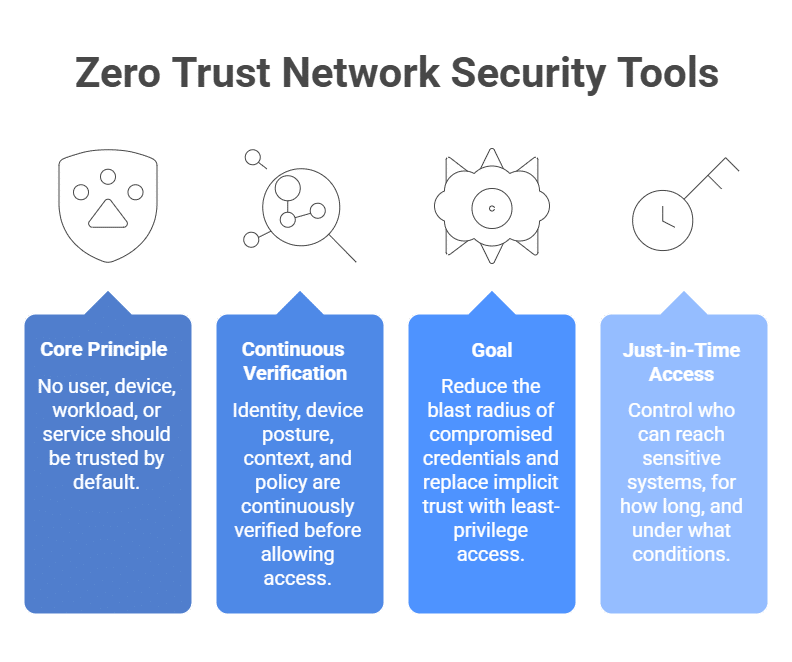
Zero trust network security tools enforce one simple idea: no user, device, workload, or service should be trusted by default. Instead of granting broad, persistent network access, zero trust network security tools continuously verify identity, device posture, context, and policy before allowing access to specific apps, systems, or data.
The goal is to reduce the blast radius of compromised credentials and replace implicit trust with tightly controlled, least-privilege access. In practice, that means different tool categories solving different parts of the problem, as we will explore in this comprehensive list.
Most relevant are Just-in-Time access tools, which control who can reach sensitive systems, for how long, and under what conditions. That makes these tools especially relevant for cloud-native teams that need stronger security without slowing developers down.
It’s also important to clear up a common misconception: zero trust network security tools are not just firewalls or IAM platforms with a new label. They are part of a broader zero trust architecture built around the principles of zero trust that combine identity, access, segmentation, and continuous verification. If you’re managing sensitive cloud resources or hybrid infrastructure, zero trust tooling quickly becomes a practical requirement rather than a nice-to-have.
Top Picks at a Glance
- Recommended for cloud-native SaaS and regulated engineering teams that need to remove standing access to infrastructure, databases, and internal apps without slowing developers down: Apono
- Recommended for teams that want identity-aware access to internal apps and services: Pomerium
- Recommended for IT teams that want simple, identity-based access to infrastructure: Tailscale
- Recommended for enterprises that want to deploy identity-based microsegmentation without ripping up the network: Elisity
- Recommended for OT, industrial, and cyber-physical environments that need secure remote access: Cyolo
Comparison Table: Best Zero Trust Network Security Tools Compared
| Tool | Best for | Key strength | Key limitation | Pricing (starting) | Setup effort |
| Apono | Cloud-native teams replacing standing privileged access | Automated JIT access across infra and apps | Not a full ZTNA or microsegmentation platform | Custom quote | Low |
| Pomerium | Identity-aware access to internal apps and services | Strong app-layer access control | Less suited to broader SASE needs | Free; business from $7/user/month | Med |
| Appgate | Complex hybrid environments needing direct-routed ZTNA | Flexible SDP architecture across many use cases | Heavier rollout than simpler ZTNA tools | By inquiry | High |
| Banyan Security | Device-centric ZTNA within a broader SSE stack | ZTNA plus VPNaaS, CASB, and SWG | Less focused if you only want standalone ZTNA | License-based | Med |
| GoodAccess | SMBs needing simple zero trust access | Fast deployment with no hardware | Less suited to large, complex enterprises | From $7/user/month + gateway fee | Low |
| iboss | Enterprises consolidating around SASE | Broad cloud-delivered security stack | More platform than ZTNA-only buyers need | By inquiry | High |
| Tailscale | Simple identity-based infrastructure access | Lightweight secure access to infra resources | Less governance-heavy than PAM tools | By inquiry | Low |
| Teleport | Governed access to servers, DBs, and Kubernetes | Strong privileged access controls and auditability | More infrastructure-focused than general ZTNA | By inquiry | Med |
| ThreatLocker | Controlling endpoint admin rights | Strong privilege elevation and device controls | Less focused on cloud-native infra workflows | By inquiry | Med |
| Elisity | Microsegmentation without major network changes | Low-friction identity-based segmentation | Not built for privileged access workflows | By inquiry | Med |
| Zero Networks | Automated lateral movement prevention | Segmentation plus identity controls and MFA | Narrower scope than broader zero trust platforms | By inquiry | Med |
| ColorTokens | Broad breach containment across mixed environments | Wide coverage across cloud, endpoints, and OT | More complex than narrower segmentation tools | By inquiry | High |
| NetFoundry | Secure connectivity across distributed and edge environments | Identity-first connectivity across IT, OT, and IoT | More connectivity-focused than employee access-focused | Free trial; then by inquiry | Med |
| Cyolo | Secure remote access for OT and cyber-physical systems | Built for critical and legacy operational environments | More OT-specific than general-purpose tools | By inquiry | High |
| Xage | One zero trust platform across IT, OT, and cloud | Combines ZTNA, PAM, and microsegmentation | Broader scope than single-use-case buyers may need | By inquiry | High |
How We Compared These Tools
We evaluated these zero trust solutions across five core categories. Rather than looking for generic security claims, we focused on three qualities that matter most in the current cyber threat landscape: automation, granularity, and frictionless orchestration.
Our evaluation is based on publicly available information at the time of writing, including official product pages, technical documentation, pricing and packaging details, and vendor materials.
We didn’t run hands-on tests for every platform. If a capability was unclear, bundled into a broader platform, or described in vague terms, we avoided making stronger claims than the available evidence supported.
Here’s how we compared tools within each category:
Category 1: Just-in-Time Access Management
We looked for tools that replace standing access with time-bound, least-privilege access. The best solutions incorporate features like automated request and approval flows, auto-expiring permissions, and audit logs. We also looked for granular access to specific resources and systems, plus Slack, Teams, or CLI-based workflows.
Category 2: Zero Trust Network Access (ZTNA)
These zero trust solutions provide modern alternatives to traditional VPNs, with features like identity-aware access to apps and services and continuous verification based on user, device, and session context. We reviewed them based on their fit for remote and hybrid environments.
Category 3: Infrastructure and Privileged Access
We reviewed tools that secure high-impact access to servers, databases, Kubernetes, and cloud consoles. Identity-based infrastructure access and coverage across modern infrastructure environments were bonus points.
Category 4: Microsegmentation and Lateral Movement Prevention
These tools contain the blast radius after initial compromise. Key features include microsegmentation (or identity-based segmentation), automated policy creation, and visibility into assets and communication paths.
Category 5: Zero Trust Networking for Distributed and OT Environments
This solutions category focuses on securing distributed and operational environments without disrupting critical systems. These tools offer secure remote access for OT, edge, and distributed sites, in addition to support for hybrid, legacy, or air-gapped environments.
15 Top Zero Trust Network Security Tools [By Category]
Category 1: Just-in-Time Access Management
1. Apono
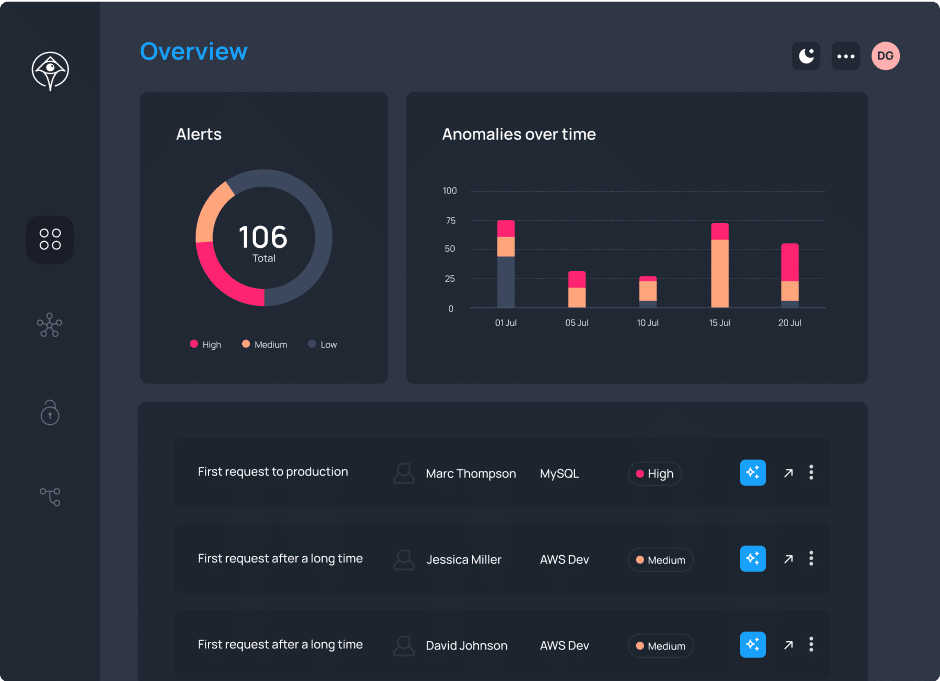
Apono falls in the category of Just-in-Time access management tools for zero trust network security. It tackles a gap that many zero trust programs leave open: privileged access to cloud infrastructure, production systems, databases, and internal applications.
Instead of relying on standing permissions, oversized roles, or manual approval tickets, Apono automates Just-in-Time access across the stack and complements broader identity governance and administration efforts. Your team can grant granular, time-bound access only when it is needed, then automatically revoke it when the task is done.
The solution is especially well-suited to cloud-native SaaS companies and regulated teams that need strong access controls but cannot afford operational friction.
Main features
- Automated Just-in-Time access flows across infrastructure, applications, and sensitive systems
- Auto-expiring permissions that remove standing access automatically
- Self-serve, granular access requests through Slack, Teams, or CLI
- Fast deployment in under 15 minutes
- Break-glass and on-call access flows for urgent production issues
- Comprehensive audit logs and automated reporting for compliance and investigations
- Granular, time-bound permissions down to specific resources and systems
Recommended for: Cloud-native SaaS and regulated engineering teams that need to remove standing access to infrastructure, databases, and internal apps without slowing developers down.
Pricing: Contact the Apono team for a tailored quote.
Review: “When it comes to managing business access control, Apono offers the best features and is very capable. The process of implementation was easy, and this product is easy to use, too. I like that it is cloud-based and comes with lots of automation features.”
Category 2: Zero Trust Network Access (ZTNA)
2. Pomerium
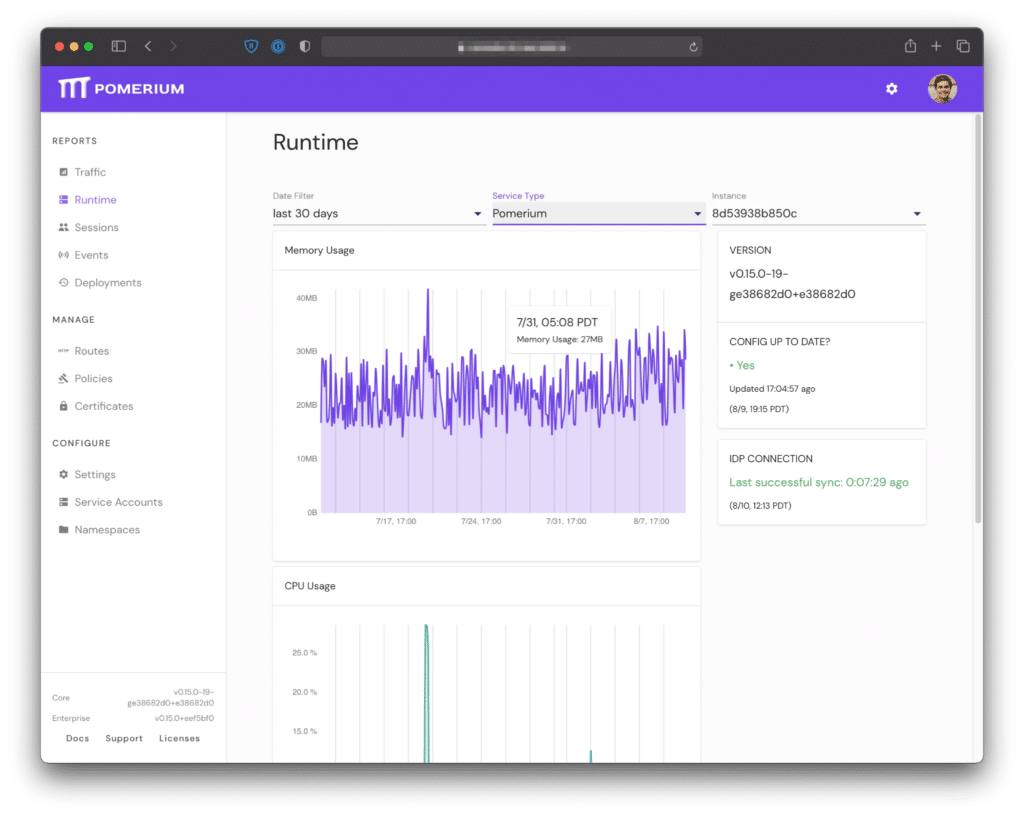
Pomerium is a strong choice for teams that want identity-aware access at the application layer instead of broad network-level access. Its platform combines a hosted control plane with a self-hosted proxy or data plane, supports clientless remote access, and focuses on securing applications without a traditional VPN client.
Main features
- Identity-aware access for internal apps, servers, services, and workloads
- Continuous verification based on identity, device state, and request context
- Clientless remote access with a hosted control plane and self-hosted proxy/data plane
Recommended for: Teams that want identity-aware access to internal apps and services.
Pricing: Free personal tier; business starts at $7 per user/month.
Review: “I like Pomerium because it helps us to secure data. [Plus] it’s very useful because it provides proxy network VPN.”
3. Appgate
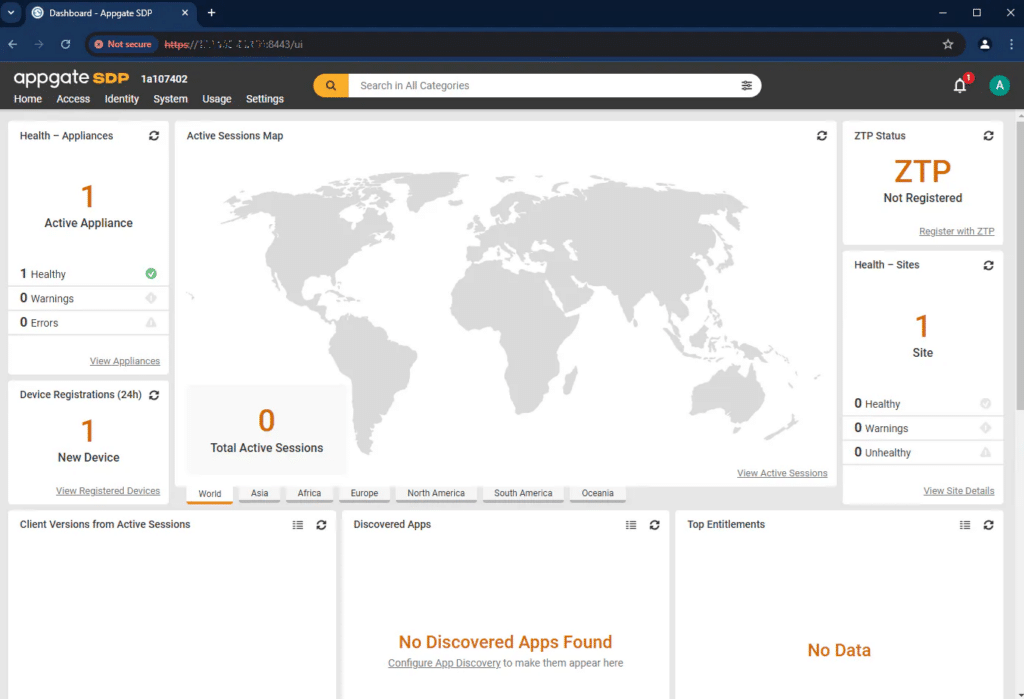
Appgate is built for organizations with complex hybrid IT that need direct-routed ZTNA rather than a cloud-routed model. It positions its platform around universal ZTNA for secure remote access, SaaS access, workload-to-workload communication, branch and site connectivity, and OT/IoT use cases.
Main features
- Direct-routed ZTNA that secures connections across complex hybrid IT
- Software-defined perimeter architecture for flexible deployment
- Support for user-to-app, workload, branch, and OT access use cases
Recommended for: Large enterprises with complex hybrid environments that need flexible, direct-routed ZTNA.
Pricing: 30-day free trial, then pricing is by inquiry.
Review: “I find Appgate SDP to be very powerful and flexible in terms of configurability. The configuration data model is simple to understand, which makes it much easier to handle.”
4. Banyan Security
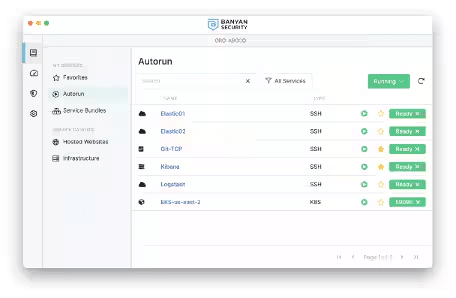
Banyan Security is now part of SonicWall Cloud Secure Edge (CSE), which is worth noting if you are comparing vendors and product names. The platform is positioned as a device-centric SSE offering that includes ZTNA, VPNaaS, CASB, and SWG, with least-privilege access to private websites.
Main features
- Device-centric ZTNA with integrated SSE capabilities
- Client-based and clientless access options with consistent policy enforcement
- Short-lived credentials and centralized policy management for private apps and cloud resources
Recommended for: Organizations that want device-centric ZTNA as part of a broader SSE approach.
Pricing: License-based packaging.
Review: “Ease to use – Banyan works in the background and alerts me if I don’t have any security features running.”
5. GoodAccess
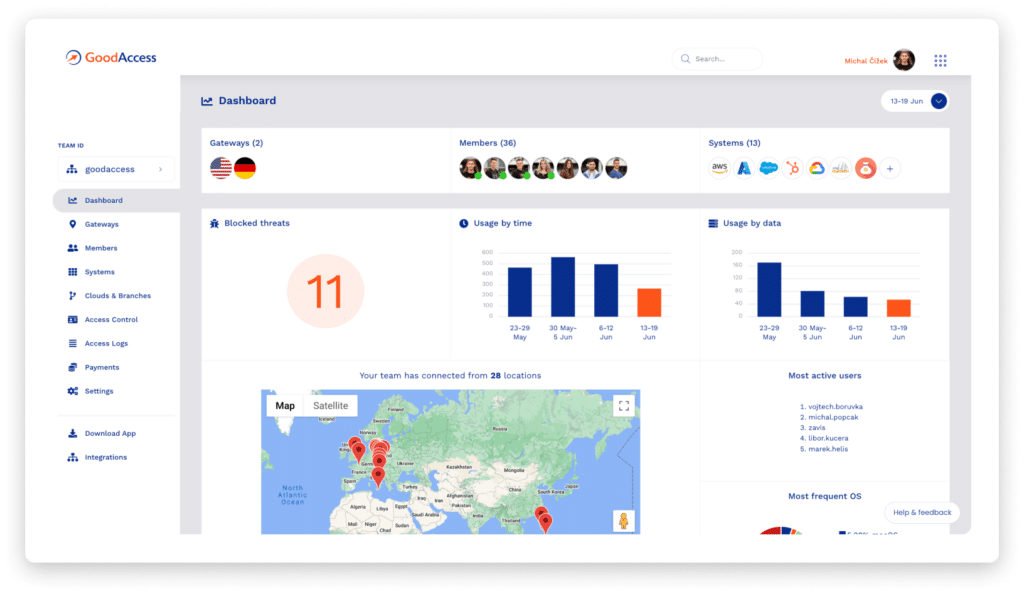
GoodAccess is a cloud-delivered ZTNA platform aimed primarily at small and midsize businesses. It positions itself as a fast-to-deploy way to create a secure virtual network between users, clouds, on-prem resources, and private LANs, with centralized control and no hardware to manage.
Main features
- Cloud-delivered zero trust access with no hardware required
- Network and application-layer segmentation with access logging
- Fast deployment with centralized management for distributed teams
Recommended for: Small and midsize businesses that want simple, fast-to-deploy zero trust access for distributed teams.
Pricing: The Essential package starts at $7 per user/month plus $49/month per dedicated gateway. Premium starts at $11 per user/month.
Review: “Ease of use and functionality, the management dashboard is well laid out and easy to use.”
6. Iboss
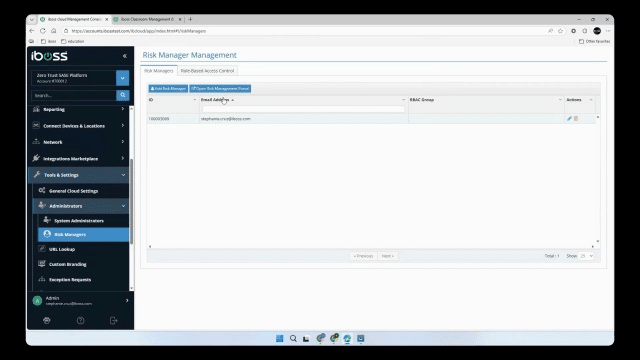
iboss presents its zero trust offering as part of a broader cloud-delivered SASE platform rather than as a standalone ZTNA product. iboss emphasizes replacing legacy VPNs, proxy appliances, and parts of the security stack with a unified platform that combines ZTNA, Secure Web Gateway, CASB, DLP, browser isolation, and SD-WAN.
Main features
- Application-specific access with continuous verification and zero network exposure
- Cloud-native ZTNA designed to replace legacy VPNs
- Broader SASE capabilities, including SWG, CASB, DLP, browser isolation, and SD-WAN
Recommended for: Enterprises looking to consolidate ZTNA into a larger SASE stack.
Pricing: By inquiry.
Review: “iBoss is easy to use for those unfamiliar with online security and filtering.”
Category 3: Infrastructure and Privileged Access
7. Tailscale
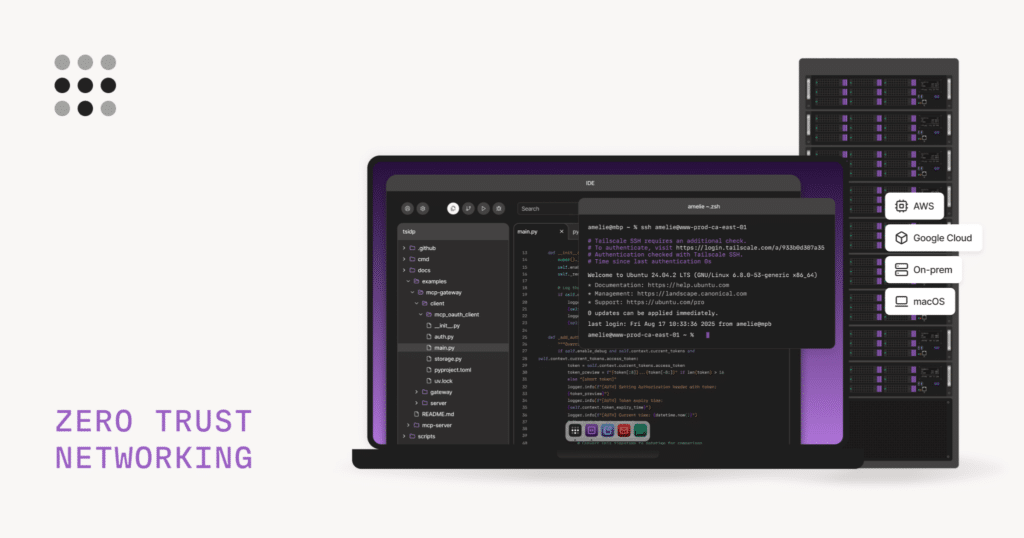
Tailscale fits this category as an identity-based connectivity platform that can secure access to infrastructure across cloud, on-prem, and hybrid environments without the usual VPN sprawl. For teams focused on infrastructure access, its pitch is simple: give users resource-level access to databases, Kubernetes clusters, VMs, and containers, with end-to-end encrypted networking.
Main features
- Supports session recording, log streaming, network flow logs, and device posture integrations.
- Fine-grained least-privilege controls.
- Identity-based infrastructure access.
Recommended for: Teams relying on IT operations analytics that want simple, identity-based access to infrastructure.
Pricing: By inquiry.
Review: “The dashboard and overall UI are easy to understand, and they’re flexible as well.”
8. Teleport
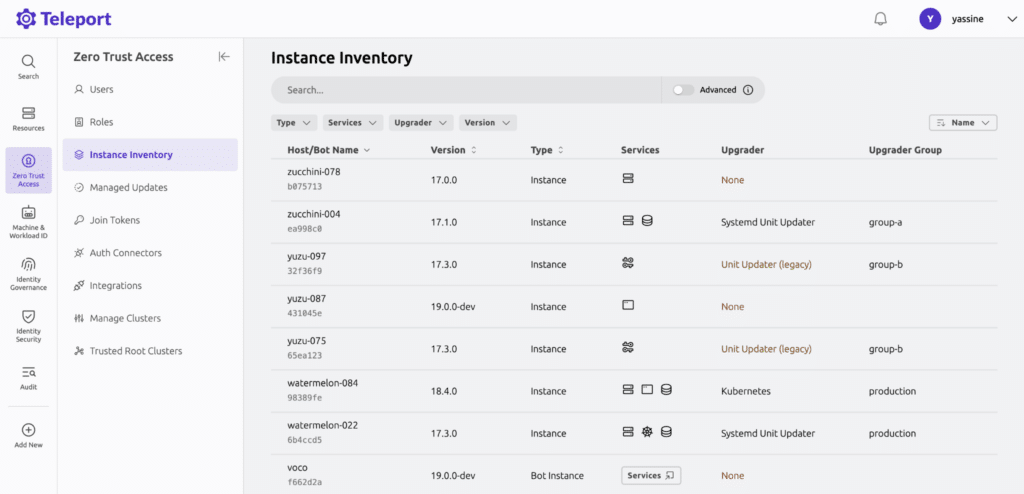
Teleport is one of the strongest fits in this category because it is built specifically for zero trust infrastructure access. It gives engineering teams and machine identities secure, identity-driven access to servers, databases, Kubernetes clusters, cloud consoles, internal apps, and MCP resources.
Main features
- Unified access to servers, databases, Kubernetes, cloud consoles, and internal apps from one platform
- Short-lived certificates and secretless authentication
- Session recording, access requests, and detailed audit trails
Recommended for: Tightly governed privileged access to servers, databases, Kubernetes, and cloud consoles.
Pricing: By inquiry.
Review: “I like how it uses single sign on and role based access, so permissions stay tight and traceable.”
9. ThreatLocker
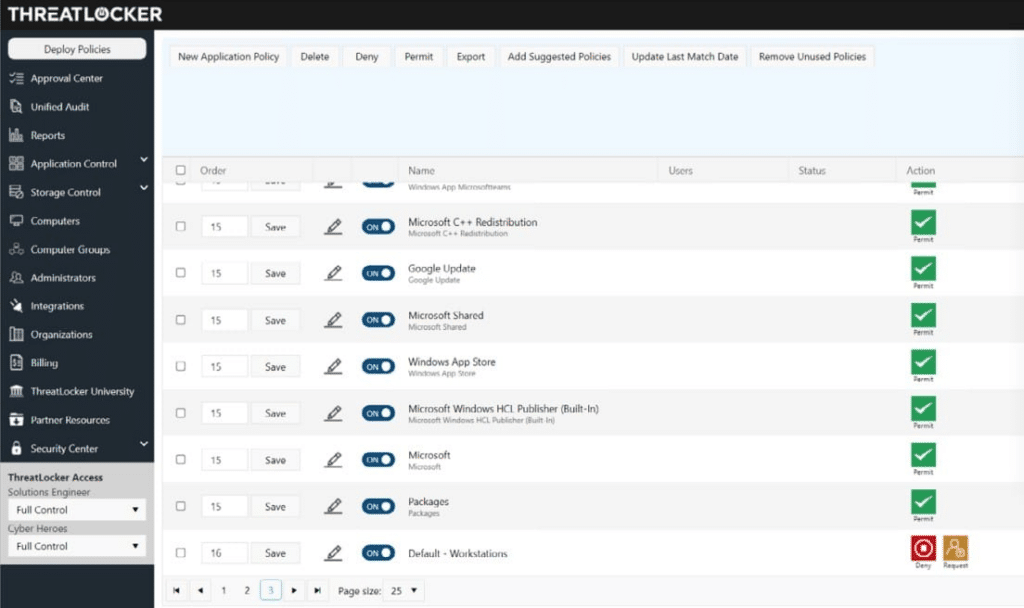
ThreatLocker is a broader zero trust platform rather than a pure infrastructure PAM tool, but it still belongs in this category because it combines privileged access management, network access controls, and cloud access controls in one stack. Its positioning is especially focused on reducing local admin abuse and enforcing device-based verification.
Main features
- Application-based privilege elevation that limits admin rights to approved apps and specific tasks
- Device-based zero trust network access
- Zero trust cloud access that verifies the device, request, and policy
Recommended for: Organizations focused on controlling admin rights on endpoints.
Pricing: By inquiry.
Review: “The unified dashboard that allows access to all modules is great, with a consistent look and feel.”
Category 4: Micosegmentation and Lateral Movement Prevention
10. Elisity
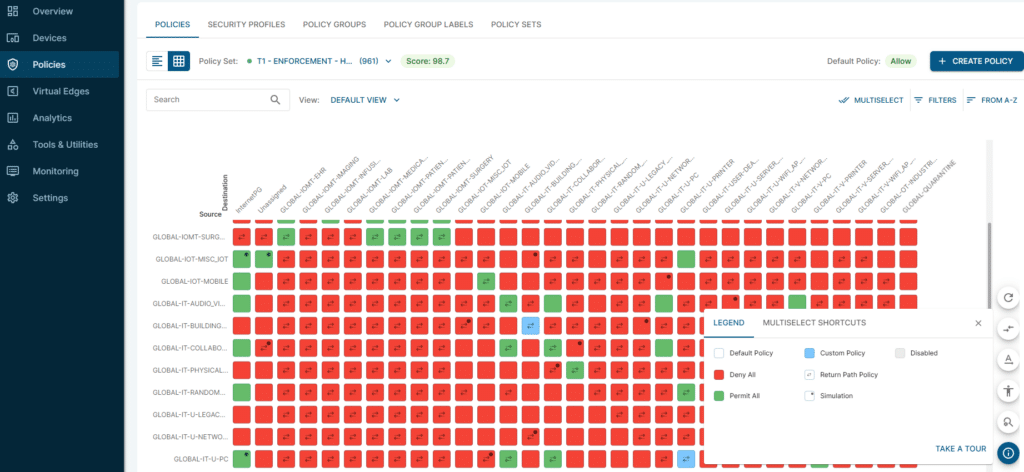
Elisity is built for organizations that want to stop lateral movement without the usual complexity of legacy segmentation projects. Its platform centers on identity-based microsegmentation, using existing infrastructure to discover assets, map identities, and enforce granular policies without requiring agents, new hardware, or disruptive network changes.
Main features
- Identity-based microsegmentation without agents, new hardware, or network changes.
- IdentityGraph visibility that discovers and correlates in real time.
- Dynamic policy engine with context-aware controls.
Recommended for: Enterprises that want to deploy identity-based microsegmentation without ripping up the network.
Pricing: By inquiry.
Review: “It’s easy to understand, easy to implement.”
11. Zero Networks
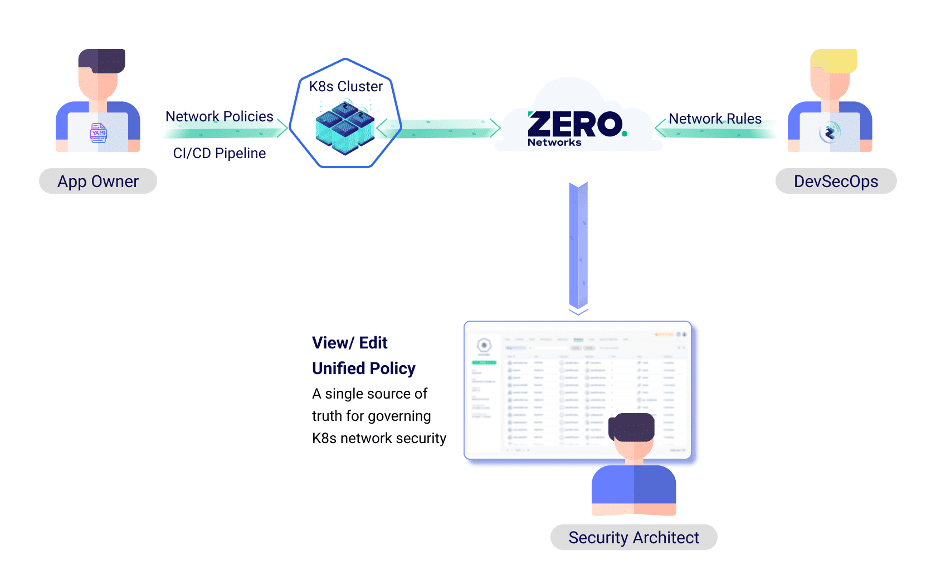
Zero Networks is a strong fit for this category because it focuses directly on blocking lateral movement through automated microsegmentation and identity segmentation. The platform emphasizes fast, agentless deployment and extra protection for privileged access.
Main features
- Automated, agentless microsegmentation that can segment networks and identities in about 30 days.
- Identity segmentation that restricts admin and service accounts.
- Network-layer MFA that keeps privileged ports closed by default.
Recommended for: A more automated way to contain ransomware and lateral movement.
Pricing: By inquiry.
Review: “The asset management, Policy expert, and IRM functionality stand out the best.”
12. ColorTokens
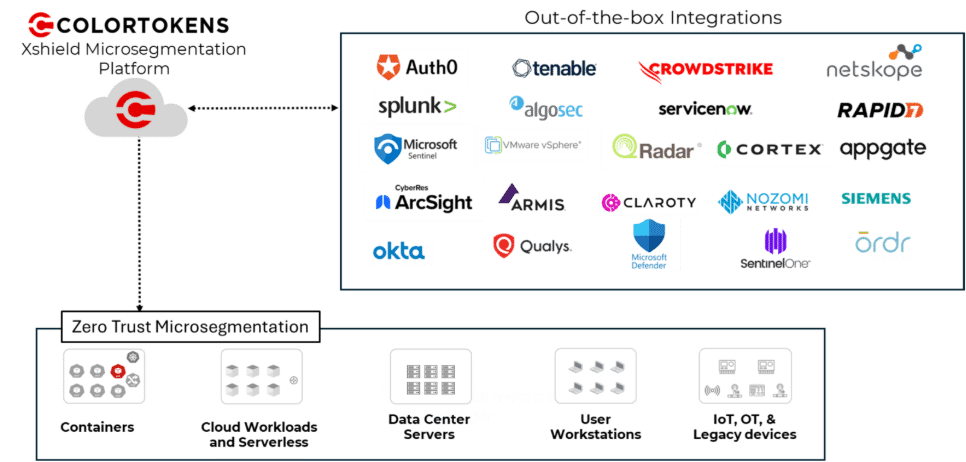
ColorTokens belongs in this category because Xshield is designed specifically to contain breaches by putting a micro-perimeter around every asset. Its pitch is broader than data-center-only segmentation as the platform covers data center workloads, cloud assets, Kubernetes, endpoints, and OT/IoT environments.
Main features
- Micro-perimeters around every asset.
- AI-assisted policy workflows and simulation mode to speed policy design.
- Broad coverage across data center, cloud, Kubernetes, endpoints, and OT/IoT environments with risk-based dashboards.
Recommended for: Broad breach containment across data center, cloud, endpoints, Kubernetes, and OT/IoT environments.
Pricing: By inquiry.
Review: “What I like about ColorTokens is how it blends smoothly with security systems.”
Category 5: Zero Trust Networking for Distributed and OT Environments
13. NetFoundry
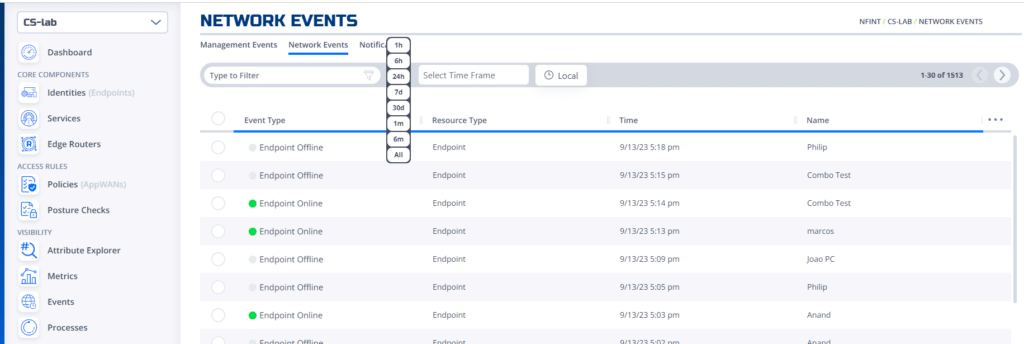
NetFoundry is a strong fit for distributed and OT-heavy environments because it focuses on identity-first connectivity for workloads, sites, devices, and applications. It is positioned as a zero-trust overlay that works across IT, OT, IoT, multi-cloud, and even air-gapped environments, which makes it especially relevant when connectivity itself is the problem to solve.
Main features
- Closes inbound ports and authenticates every connection before it is established.
- Uses identity-based policy, least-privilege access, and microsegmentation for workloads and sites.
- Supports hosted, self-hosted, and air-gapped deployments.
Recommended for: Secure connectivity across distributed apps, sites, devices, and edge environments.
Pricing: Free trial, then pricing is by inquiry.
Review: “One of the key advantages is how NetFoundry simplifies networking. It provides secure, zero-trust connectivity without the need for traditional VPNs or hardware.”
14. Cyolo
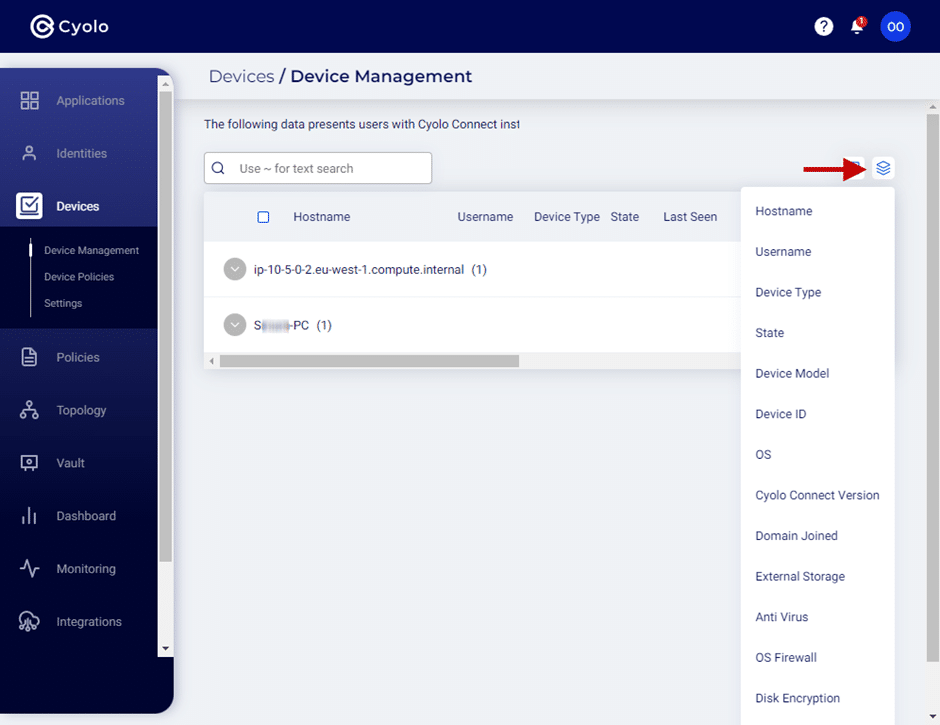
Cyolo belongs in this category because it is purpose-built for secure remote access to OT and cyber-physical systems, with a strong emphasis on keeping operations running while giving IT centralized visibility and control. Its positioning is less about generic office access and more about enabling employees to reach critical assets.
Main features
- Secure remote privileged access for OT, ICS, and cyber-physical systems without disrupting operations.
- Identity-based access for legacy systems.
- Session recording, supervision, approvals, and compliance risk management controls.
Recommended for: OT, industrial, and cyber-physical environments that need secure remote access.
Pricing: By inquiry.
Review: “Easy to integrate into a SASE offering [with] Cloud and on-prem deployment support.”
15. Xage
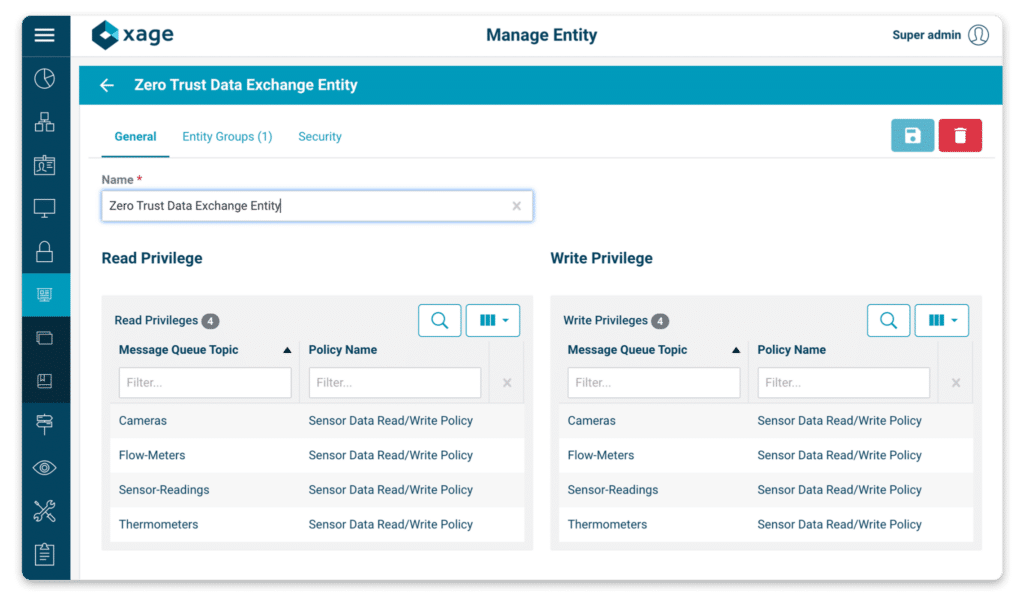
Xage is one of the more comprehensive options in this category because it is built to secure access across IT, OT, cloud, remote operational edge, and legacy assets from a single zero-trust platform. It offers granular policy enforcement and just-in-time access controls aimed at reducing the risks of VPN-style access.
Main features
- Combines ZTNA, PAM, and microsegmentation.
- Enforces granular, identity-based policies and just-in-time access.
- Supports legacy systems.
Recommended for: A single zero trust platform spanning IT, OT, cloud, and legacy systems.
Pricing: By inquiry.
Review: “I found that the agentless architecture of Xage Fabric convenient for me.”
Reduce Risk Without Slowing Down Engineering
Zero trust network security tools matter because most environments are no longer protected by a single perimeter. The smartest way to evaluate this market is by category, because ZTNA, microsegmentation, privileged access, and OT access tools solve different problems and belong in different parts of the stack.
The right zero trust stack depends on your environment, risk model, and operational needs. For teams trying to eliminate risky standing permissions without slowing engineers down, Apono stands out as the Just-in-Time access management leader.
Apono replaces broad, persistent access with granular, time-bound access across infrastructure, applications, and sensitive systems, while supporting least privilege and faster incident response.
If your zero trust strategy still relies on standing permissions, Apono gives you a faster way to move to granular, time-bound access with full auditability. Book a demo to see how Apono helps eliminate standing access across modern cloud environments.