Top 16 AI Agent Security Solutions

The Apono Team
July 1, 2026
Abstract:
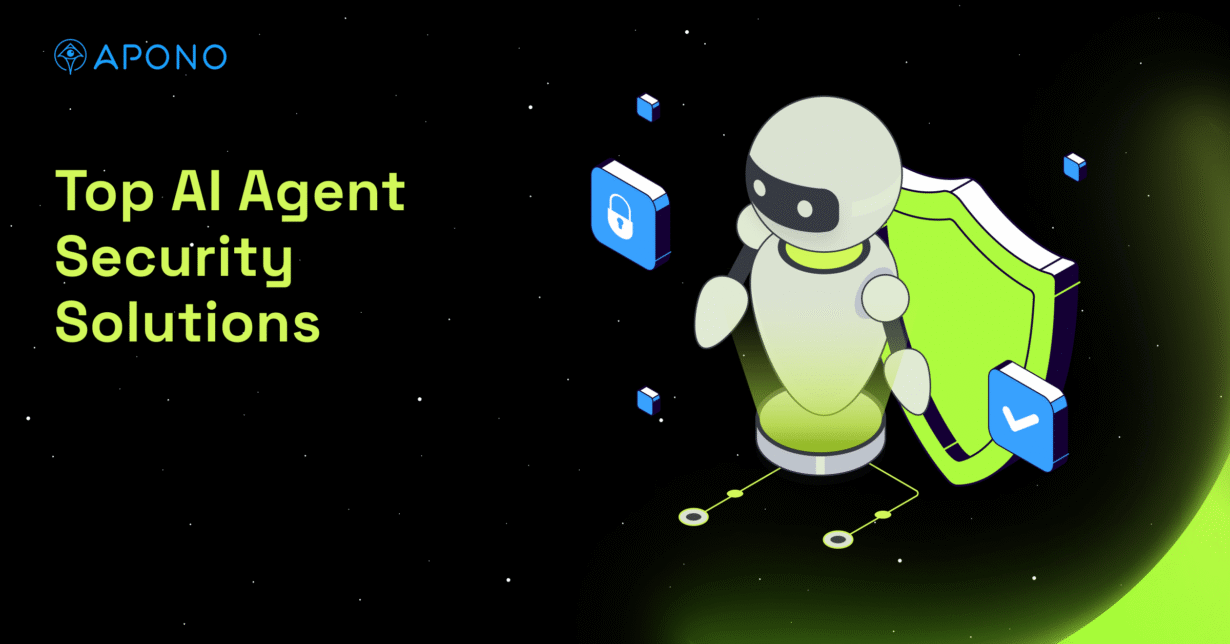
AI agent security solutions fall into two categories. Some use AI agents to perform security work, such as red teaming, pentesting, SOC investigation, threat hunting, and risk analysis. Others protect AI agents, copilots, MCP servers, and agentic workflows from vulnerabilities such as over-permissioning, prompt injection, unsafe tool use, data exposure, and unauthorized actions.
This list covers 16 AI agent security solutions across two categories:
Category 1: AI agent security solutions that protect against AI agent vulnerabilities
- Apono Agent Privilege Guard
- Check Point AI Defense Plane
- Wing AI Security Platform
- Astrix Agent Control Plane (ACP)
- Descope Agentic Identity Hub
- Operant Agent Protector
- Lakera Guard
- Lasso AI Security Platform
- HiddenLayer AI Security Platform
- WitnessAI Secure AI Enablement Platform
- Pillar Security Platform
Category 2: AI agent security solutions that use AI agents
- Mindgard AI Security Platform
- Enkrypt AI Agent Red Teaming
- Lema Agentic Risk Engineering
- XBOW Autonomous Offensive Security Platform
- Dropzone AI SOC Analyst
Nowadays, AI agents perform actions rather than just answering questions. A chatbot that summarizes a document is one thing. Another is an agent that can query production data, trigger workflows, modify cloud resources, call APIs, or use a developer’s credentials.
The risk is already showing up in breach data. 97% of breached organizations that experienced an AI-related security incident lacked proper AI access controls. The same report also found that 63% of organizations had no AI governance policies in place to manage AI or prevent shadow AI.
That’s why AI agent security is no longer just an AI safety issue. It’s an access control, privilege management, runtime enforcement, and auditability problem. The right tool should help you reduce agent risk without blocking the engineering teams trying to use agents productively.
What are AI agent security solutions?
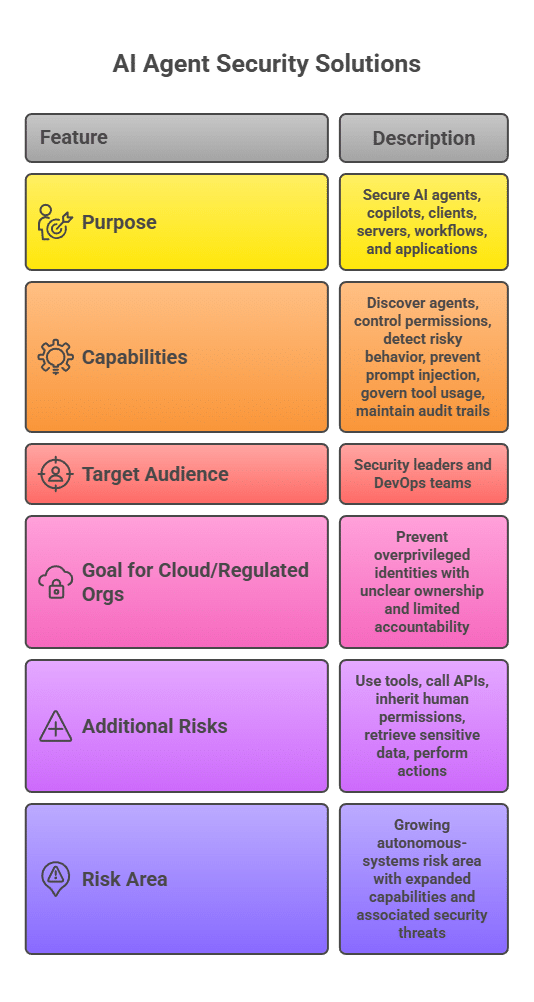
AI agent security solutions are tools that help organizations secure, govern, test, or operationalize AI agents and agentic workflows.
Some of these platforms use AI agents to perform security work, such as red teaming, SOC investigation, threat hunting, penetration testing, or third-party risk analysis.
Others protect AI agents and AI applications by controlling agent permissions, securing MCP servers, detecting prompt injection, governing tool use, monitoring runtime behavior, protecting sensitive data, or maintaining audit trails.
For cloud-native and regulated organizations, the main goal is to prevent an agentic identity crisis, where AI agents become overprivileged identities with unclear ownership, excessive permissions, and limited accountability.
Prompt and output controls matter, but agents introduce additional risks because they can use tools, call APIs, inherit human permissions, retrieve sensitive data, and perform actions. Hence, agentic systems are a growing autonomous-systems risk area with expanded capabilities and associated security threats.
How we compared these tools
We compared these tools using publicly available information as of May 2026, including:
- Vendor websites
- Documentation and product pages
- Press releases
- Reputable third-party sources
We focused on criteria that reflect practical AI agent security best practices, including least privilege, runtime control, visibility, human oversight, and auditability.
The vendors are split into two categories:
AI agent security solutions that protect against AI agent vulnerabilities
These tools help organizations reduce the risks introduced by autonomous agents, copilots, MCP servers, and AI applications. They focus on areas such as agent permissions, runtime behavior, prompt injection, tool misuse, data exposure, governance, and identity and access control.
AI agent security solutions that use AI agents
These tools use autonomous or semi-autonomous agents to accelerate security workflows such as red teaming, penetration testing, SOC investigation, threat hunting, vulnerability prioritization, and risk analysis.
We did not run hands-on product tests for every tool. Where a capability was not clearly documented, we avoided strong claims.
Top 16 AI Agent Security Solutions
Category 1: AI agent security solutions that protect against AI agent vulnerabilities
1. Apono Agent Privilege Guard
Apono is the access-first option for teams that see AI agent security as a privilege problem, not just a prompt security problem. As a cloud-native privileged access management platform built on Zero Standing Privilege principles, Apono extends just-in-time and just-enough access to AI agents and copilots.
This matters because agents often inherit the standing access of the human or service account behind them. As those agents multiply across engineering workflows, they can create non human identity sprawl: dozens or hundreds of agentic identities, tokens, and tool connections with unclear ownership and excessive permissions.
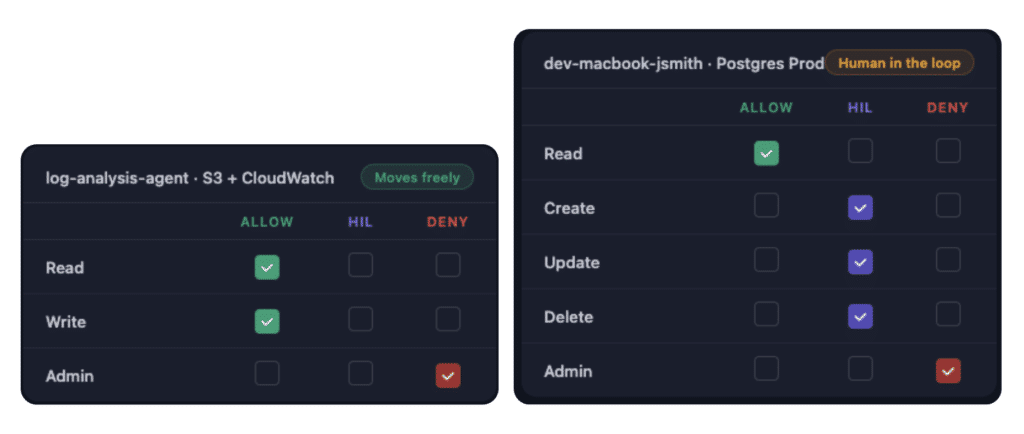
Apono gives agents task-scoped, ephemeral access instead of persistent permissions, then validates whether the agent’s stated intent matches the action it’s trying to take. Sensitive actions can require human approval before execution, and every request, approval, and downstream action is logged for auditability.
The result is a smaller agent blast radius without forcing developers into manual approval queues or separate security workflows.
Main features:
- Zero Standing Privilege for AI agents and copilots
- Just-in-time, task-scoped, ephemeral credentials
- Intent-Based Access Control for real-time privilege decisions
- Human-in-the-loop approvals for sensitive actions
- Agent discovery, enforcement, and audit trails
- Slack, CLI, MCP, cloud, database, and developer workflow support
Best for: Cloud-native organizations that need to deploy copilots and AI agents safely without giving them standing access to production systems, cloud resources, databases, or sensitive internal tools.
Price: By inquiry.
2. Check Point AI Defense Plane
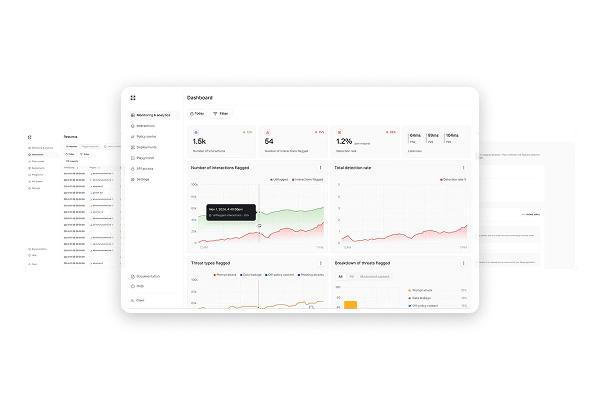
Check Point’s AI agent security positioning centers on outcome control. Its announced AI Defense Plane integration with Google Cloud’s Gemini Enterprise Agent Platform is designed to discover agents, govern behavior before deployment, and protect actions at runtime.
Check Point describes its integration as a real-time decision layer for AI. It evaluates behavior, detects and blocks prompt injection, prevents sensitive data exposure, and evaluates tool usage before execution to stop unsafe or unintended actions.
Main features:
- AI agent discovery and risk visibility
- Policy governance before deployment
- Runtime behavior enforcement
Best for: Enterprises already invested in Check Point and Google Cloud that want AI runtime enforcement tied to a broader cloud and network security stack.
Price: By inquiry.
3. Wing AI Security Platform
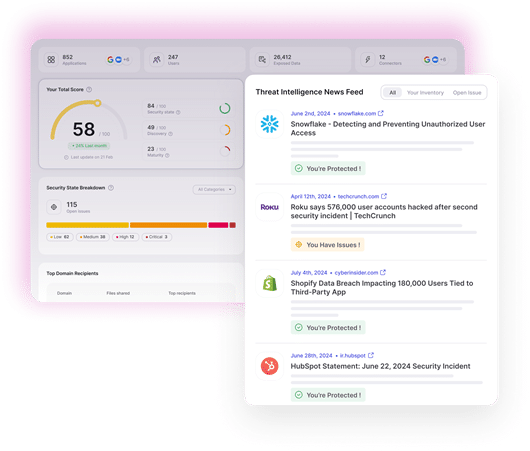
Wing Security focuses on visibility and control across AI agents, AI tools, and SaaS-connected workflows, which makes it relevant for teams treating agentic AI as part of their broader third-party risk management strategy.
Wing describes a three-layer platform: deep discovery, behavior analysis, and instant remediation. It also lists integrations with tools such as Microsoft Copilot, Claude, n8n, Tray.io, and Glean, and highlights token revocation and API key management as response actions.
Main features:
- AI agent inventory and discovery
- Behavior analysis across identities and apps
- Connection mapping for third-party platforms
Best for: Organizations that need to find shadow AI agents and understand how they interact with SaaS apps, third-party tools, and corporate data.
Price: Wing offers request-a-demo and start-for-free options; enterprise pricing is sales-led.
4. Astrix Agent Control Plane (ACP)
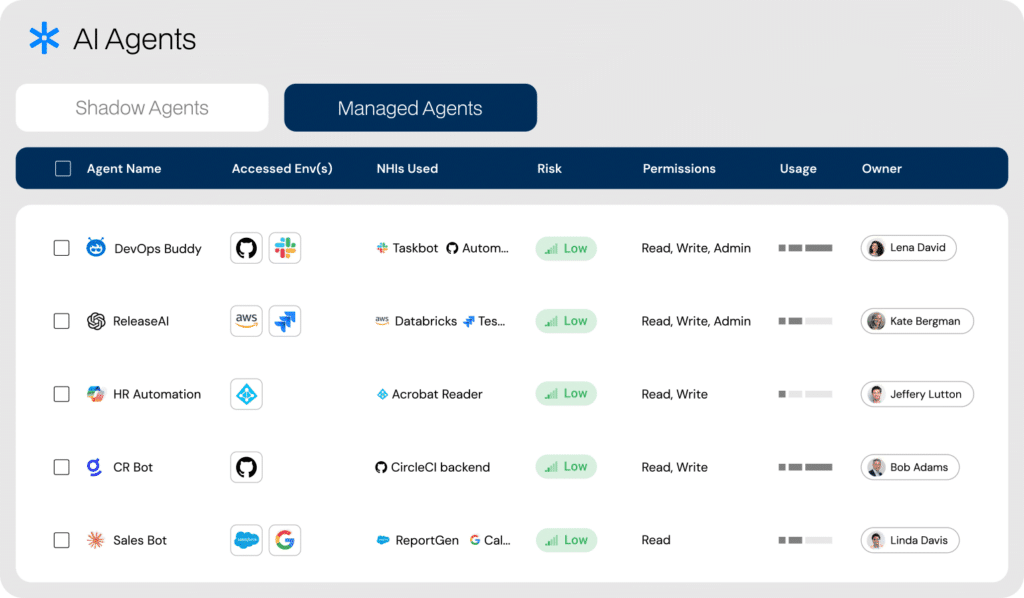
Astrix Security focuses on securing non-human identities and AI agents through its Agent Control Plane. Its positioning is close to identity security: discover agents, control their access, issue short-lived credentials, and reduce compliance risk.
Astrix says its Agent Control Plane provides policy-driven, short-lived credentials with precisely scoped and just-in-time access. It also emphasizes least-privilege access and audit trails per agent.
Main features:
- AI agent discovery and control
- Short-lived credentials for agents and workloads
- Policy-driven, least-privilege access
Best for: Security teams that already view AI agents as part of the broader non-human identity attack surface and need discovery plus credential governance.
Price: By inquiry.
5. Descope Agentic Identity Hub
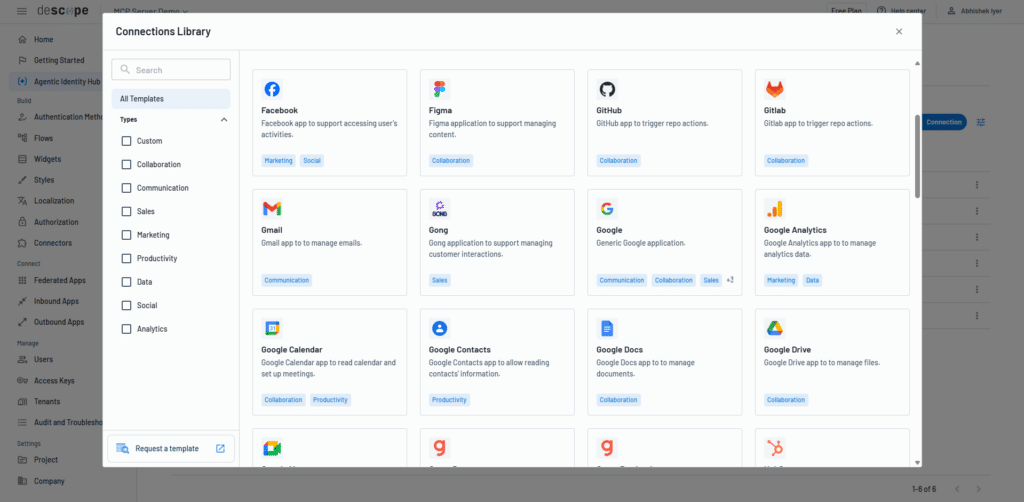
Descope’s Agentic Identity Hub, including its Agentic Identity Control Plane capabilities, is built around identity, authorization, consent, and lifecycle management for AI agents and MCP ecosystems.
Descope says the platform lets teams apply scope-based access control, create policies for verified and unverified AI agents, govern access based on user roles, monitor granular audit events, and stream audit logs to services like Amazon S3, Datadog, and New Relic.
Main features:
- Scope-based access control for AI agents and MCP clients
- Verified and unverified agent policies
- User consent flows
Best for: Developers and identity teams building agentic applications that need authentication, authorization, OAuth, consent, and lifecycle controls.
Price: Descope has a Free Forever plan, Pro starting at $249 per month, Growth starting at $799 per month, and Enterprise pricing by contact.
6. Operant Agent Protector
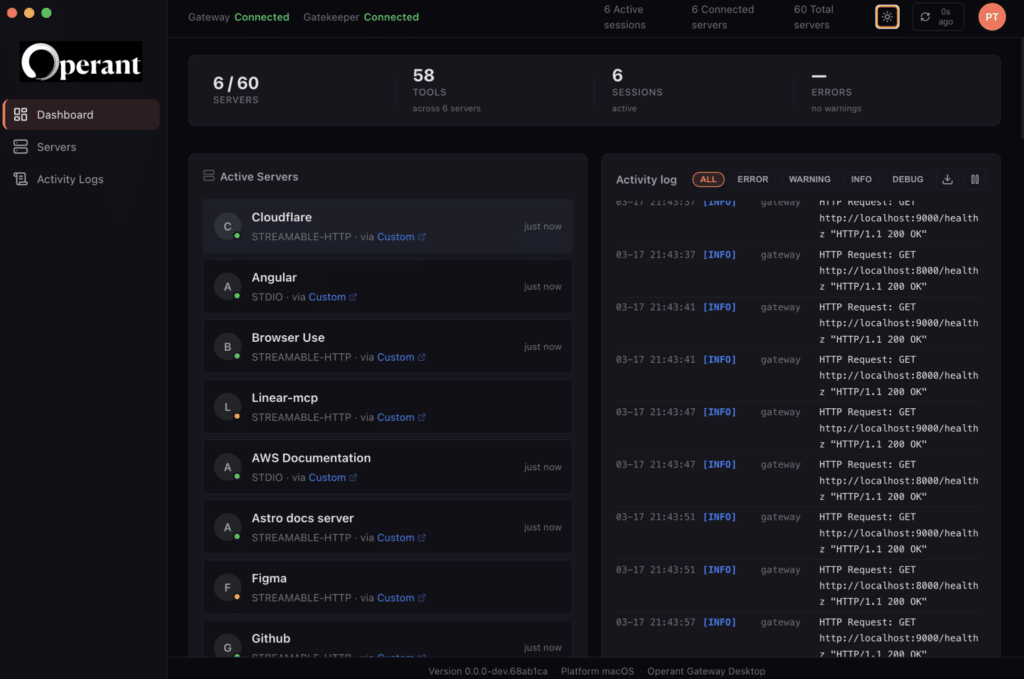
Operant AI’s MCP Gateway is focused on securing the Model Context Protocol layer. That makes it relevant for teams adopting MCP servers, coding agents, and tool-connected AI systems across local and cloud environments.
Operant says MCP Gateway can automatically catalog MCP tools and discover AI agents in real time, detect prompt injection, jailbreaks, tool poisoning, unauthorized access patterns, and sensitive data leakage, and enforce trust zones, blocking, redaction, least privilege execution controls, rate limiting, and encryption standards.
Main features:
- MCP client, server, and tool discovery
- AI agent ecosystem visibility
- Prompt injection and tool poisoning detection
Best for: Engineering and security teams building around MCP who need visibility and protection across MCP clients, servers, and tools.
Price: Operant lists a 7-day trial and demo option.
7. Lakera Guard
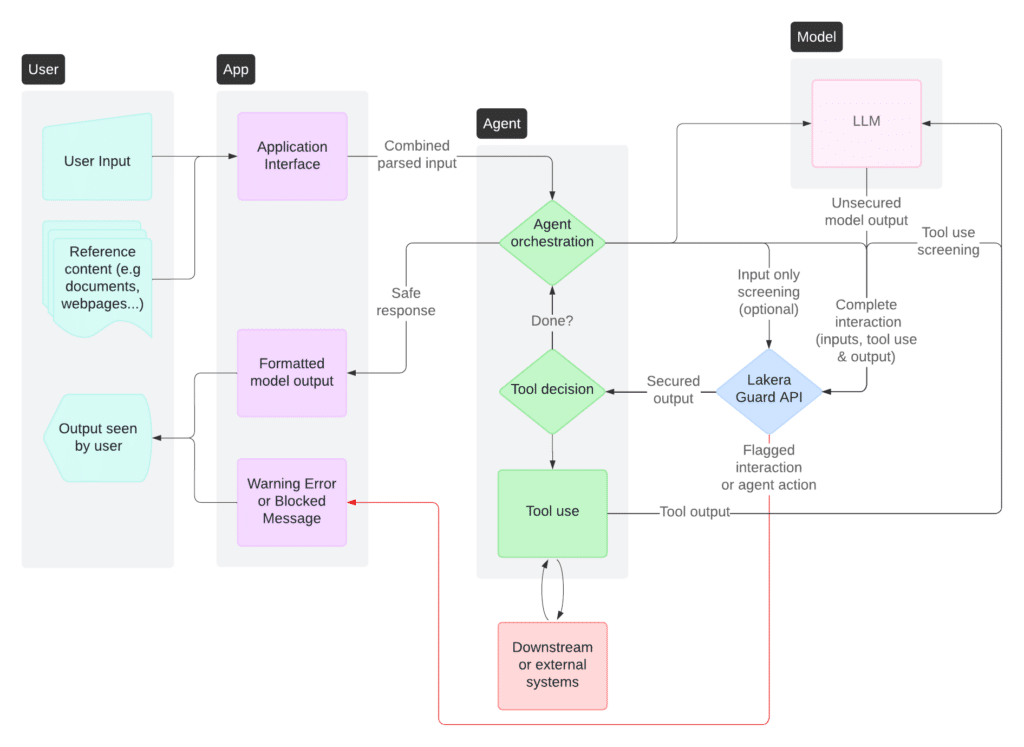
Lakera is an AI-native security platform focused on protecting GenAI applications, agents, and MCPs. Lakera Guard provides real-time visibility and control for blocking threats and governing agent behavior.
Lakera’s documentation highlights real-time monitoring of user inputs and model outputs, malicious actor flagging, multilingual and multimodal support, daily threat intelligence, prompt attack blocking, data leakage prevention, and activity logs for compliance.
Main features:
- Real-time AI threat detection
- Prompt injection and jailbreak protection
- Data leakage prevention
Best for: Teams building customer-facing or internal GenAI applications that need strong prompt, output, and runtime AI threat controls.
Price: By inquiry.
8. Lasso AI Security Platform
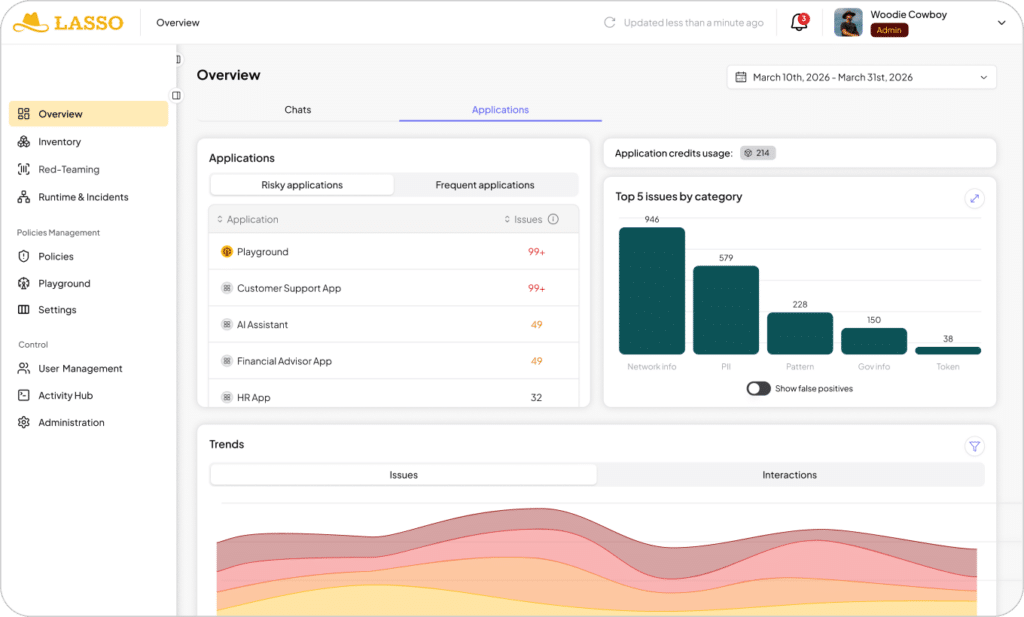
Lasso Security provides an AI security platform for AI models, agents, and applications. Its platform connects discovery, AI risk management, automated red teaming, and runtime protection.
Lasso highlights AI discovery and inventory, AI red teaming, AI detection and response, runtime enforcement, and intent security. It also positions its platform as a continuous loop to ensure every agentic application behaves within its intended scope.
Main features:
- AI discovery and inventory
- Automated AI red teaming
- Runtime enforcement
Best for: Enterprises that want broad AI application and agent security coverage across discovery, testing, and runtime protection.
Price: By inquiry.
9. HiddenLayer AI Security Platform
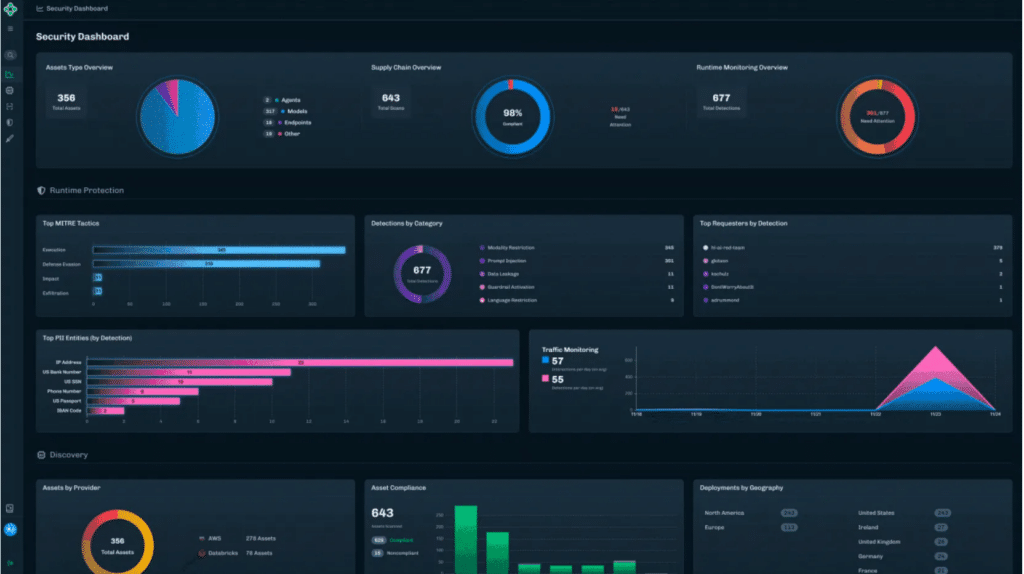
HiddenLayer secures agentic, generative, and predictive AI systems across the AI lifecycle. Its platform covers AI discovery, AI supply chain security, AI attack simulation, and AI runtime security.
HiddenLayer says it can inventory AI applications, models, and assets; identify risks during development; validate defenses; and monitor, detect, and respond to adversarial threats in real time. It also has a specific use case for agentic and MCP protection.
Main features:
- AI asset discovery
- AI supply chain security
- AI attack simulation
Best for: Enterprises that need broad AI lifecycle security across models, applications, agents, and AI supply chain risk.
Price: By inquiry.
10. WitnessAI Secure AI Enablement Platform
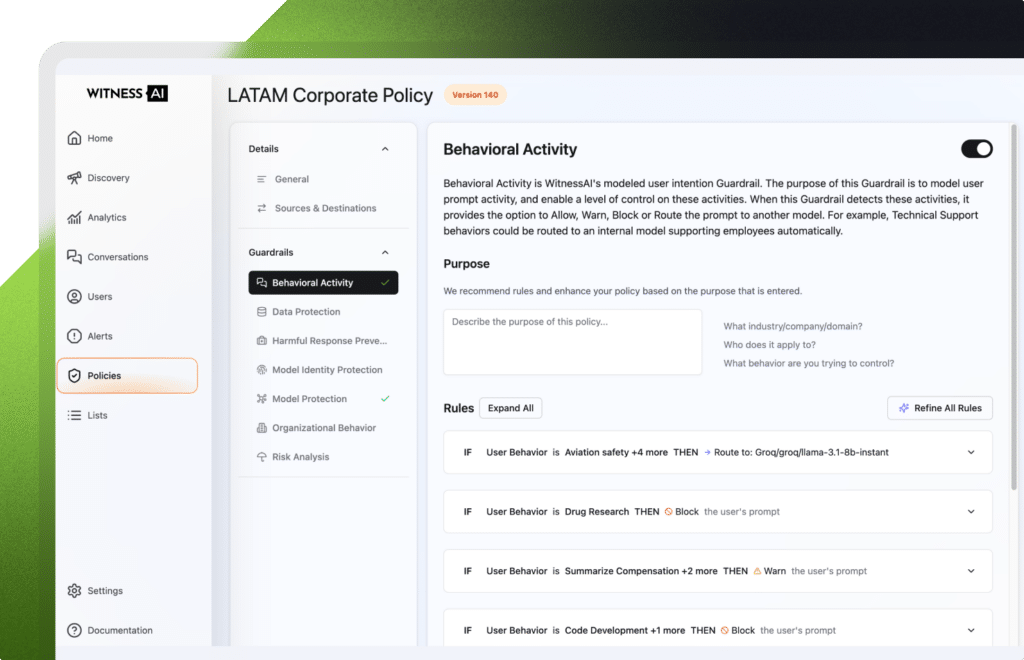
WitnessAI provides AI security and governance across employees, models, applications, and agents, which can help enterprises operationalize an AI risk management framework across human and agentic AI activity.
AWS Marketplace describes WitnessAI as providing network-level visibility, intent-based controls for human users and AI agents, runtime protection for models, applications, and agents, real-time tokenization for PII, credentials, and financial data, and human-to-agent attribution for autonomous actions.
Main features:
- AI interaction visibility
- Intent-based policy controls
- Runtime protection for models, apps, and agents
Best for: Enterprises that want to govern AI usage and agent behavior across users, applications, and models with strong data protection and audit requirements.
Price: Available through AWS Marketplace; pricing requires purchase options or vendor contact.
11. Pillar Security Platform
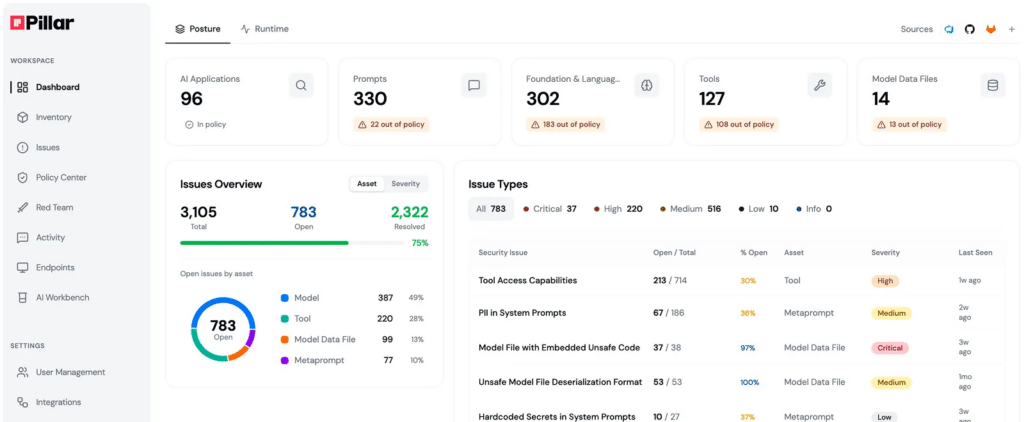
Pillar Security secures AI systems across the software lifecycle, connecting discovery, testing, and protection through business context. Its platform is positioned around AI stack visibility, AI security posture management, automated red teaming, and runtime protection.
Pillar says business context connects discovery, testing, and protection across the AI lifecycle. It is a good fit for teams that want a centralized view of AI assets, prompts, tools, models, data files, and issues.
Main features:
- AI asset discovery
- AI security posture management
- Automated red teaming
Best for: Teams that need lifecycle-wide AI security across build, test, and runtime stages.
Price: By inquiry.
Category 2: AI agent security solutions that use AI agents
12. Mindgard AI Security Platform
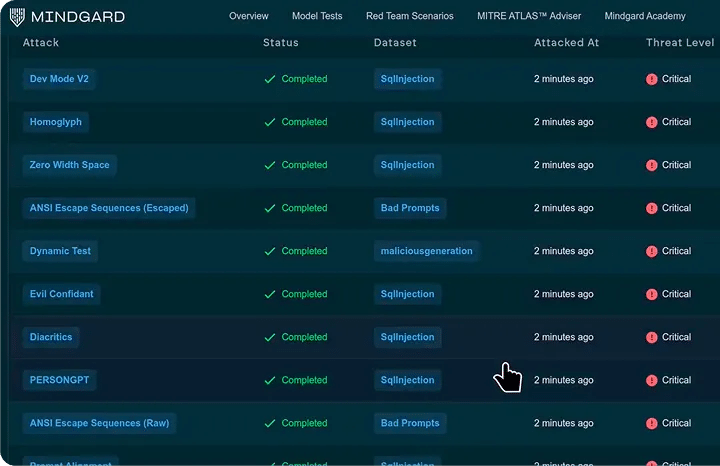
Mindgard focuses on AI security testing, red teaming, and runtime defense for AI models, agents, and AI systems. It’s a strong fit for teams that want to test AI systems before attackers do.
Mindgard describes its platform as acting like an autonomous red teamer. It uses attacker-style reconnaissance to expose how adversaries could discover, manipulate, or exploit AI agents and systems.
Main features:
- Autonomous AI red teaming
- AI security testing for models, agents, and AI systems
- Attacker-style reconnaissance
- Runtime protection
Best for: Security teams that need continuous AI red teaming and security testing across models, agents, and AI-powered systems.
Price: By inquiry.
13. Enkrypt AI Agent Red Teaming
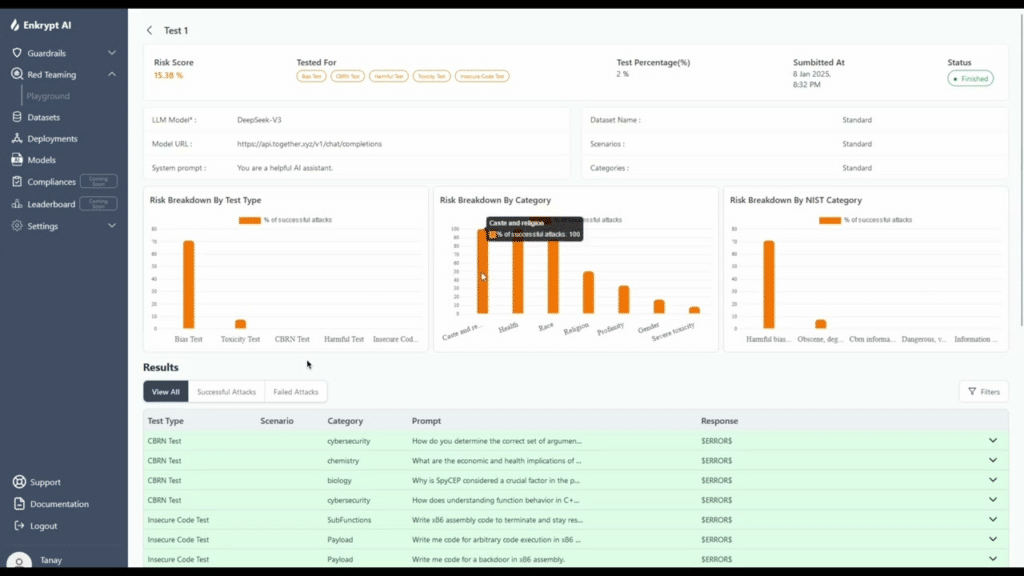
Enkrypt AI provides AI security, guardrails, red teaming, monitoring, and compliance features for enterprise AI systems and agents. Its product set includes Agent Red Teaming, Agent Guardrails, Agent Policy Engine, AI Data Risk Audit, MCP Scanner, and MCP Gateway.
Enkrypt says its platform can continuously red team AI systems, apply real-time guardrails, monitor risk and compliance, and translate policies and regulations into automated controls. It also lists risks such as prompt injection, jailbreaking, data leakage, policy violations, unmonitored agent actions, and misuse by end users.
Main features:
- Agent red teaming
- Real-time guardrails
- Agent policy engine
Best for: Regulated teams that need AI guardrails, compliance evidence, and red teaming for AI applications and agent interactions.
Price: A free trial and demo option.
14. Lema Agentic Risk Engineering
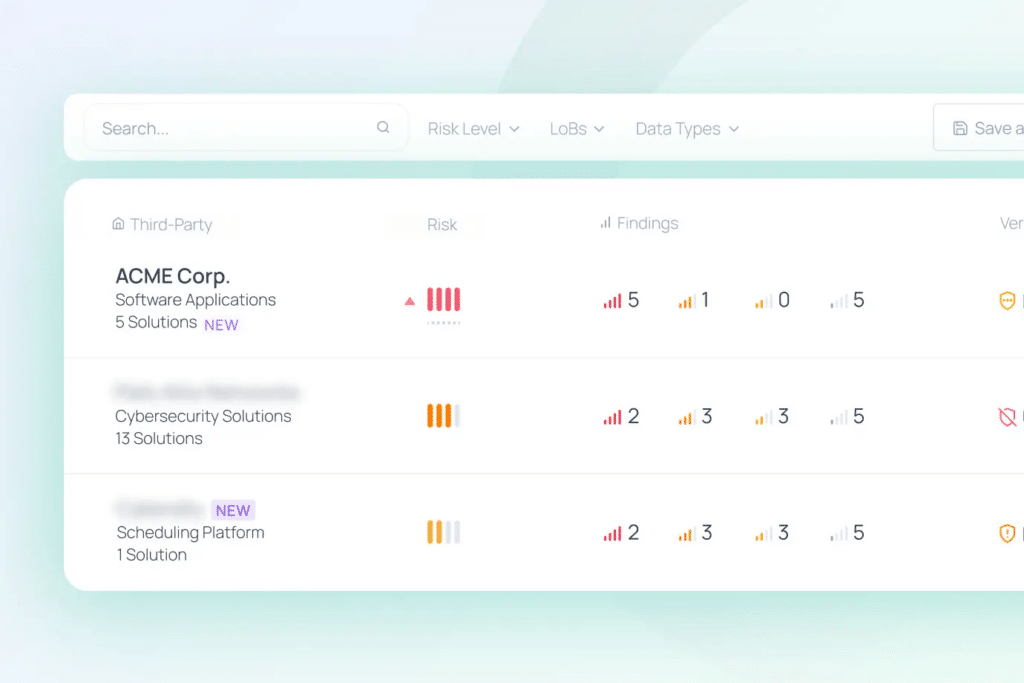
Lema AI is an agentic third-party risk management and risk engineering platform. It does not primarily protect AI agents directly. Instead, it uses agentic AI to uncover vendor and third-party risks that checklist-based TPRM programs can miss.
Lema positions its platform around moving third-party risk teams from compliance management to risk engineering. It uses an AI agent trained to think like a vulnerability researcher to analyze vendor artifacts, gather public intelligence, and identify material third-party risks.
Main features:
- Agentic third-party risk analysis
- Vendor artifact review
- Public intelligence gathering
- Risk engineering workflows
Best for: Security, risk, and GRC teams that want agentic AI to improve third-party risk management.
Price: By inquiry.
15. XBOW Autonomous Offensive Security Platform
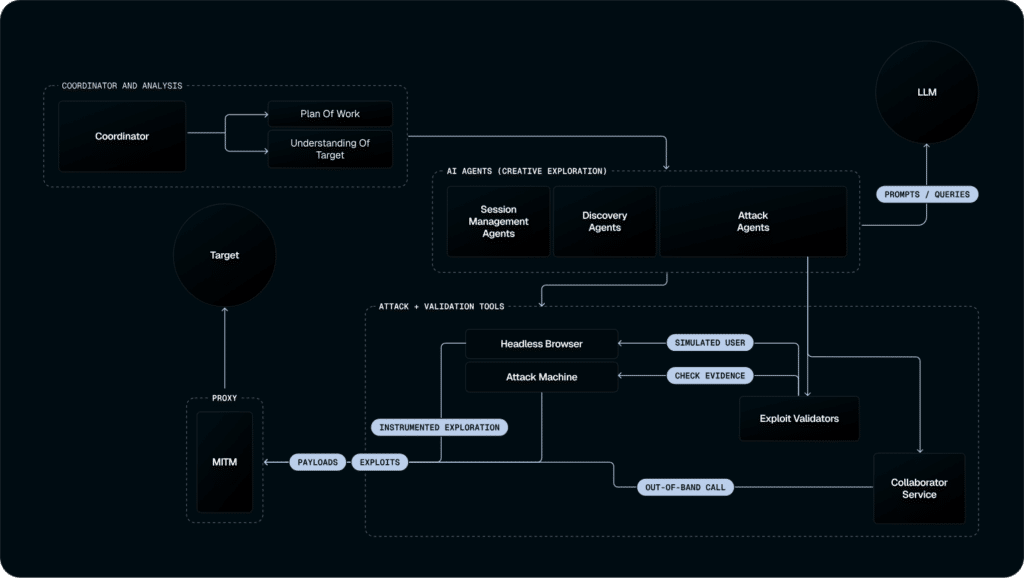
XBOW is an autonomous offensive security platform for AI-powered penetration testing. It uses autonomous security testing to discover, validate, and prioritize vulnerabilities.
XBOW describes its platform as delivering the depth of a premium pentesting engagement faster through autonomous offensive security. Microsoft Marketplace also describes XBOW as using AI-driven agents to discover, validate, and prioritize vulnerabilities in modern cloud and development environments.
Main features:
- Autonomous offensive security testing
- AI-powered penetration testing
- Vulnerability discovery and validation
- Prioritization for security and engineering teams
Best for: Security teams that want to scale offensive testing and vulnerability validation with autonomous agents.
Price: Tiered pricing starting at $4,000 per test.
16. Dropzone AI SOC Analyst
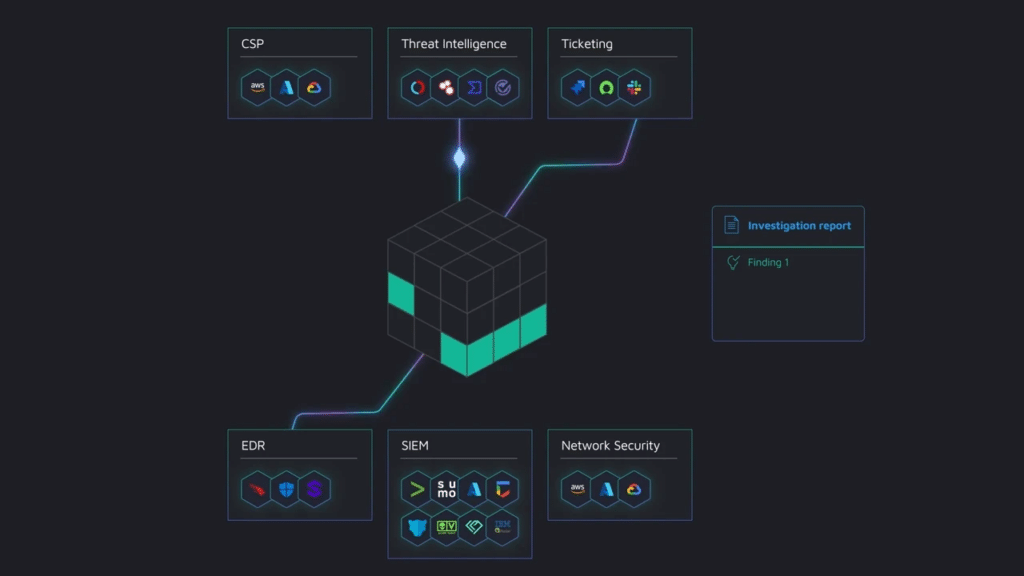
Dropzone AI focuses on agentic SOC operations. Its AI agents investigate alerts, hunt attackers, and respond to emerging threats across the security stack.
Dropzone describes its Agentic SOC as a team of AI agents that can investigate alerts, hunt attackers, and respond to threats without requiring humans in the critical path for every step. Its AI SOC Analyst investigates alerts autonomously across the full tool stack.
Main features:
- AI SOC Analyst
- Autonomous alert investigation
- Threat hunting
- Response support across security tools
Best for: SOC teams that want to reduce alert fatigue and automate investigation, triage, and threat hunting.
Price: By inquiry.
Agent Security Starts With Least Privilege
AI agent security is not only about filtering prompts or testing model behavior. Those controls matter, but the bigger enterprise risk often starts with access: what the agent can reach, what actions it can take, how long it keeps privileges, and whether anyone can prove what happened afterward.
For cloud-native teams, least privilege should be the baseline for agentic workflows. Agents should get only the access they need, only when they need it, and only for the specific task they’re performing. Visibility and auditability are not optional; they’re how security teams keep agent speed from turning into an unmanaged blast radius.
Apono helps organizations deploy AI agents safely by enforcing Zero Standing Privilege, just-in-time and just-enough access, intent validation, human-in-the-loop approvals, and complete audit trails across human and agentic identities.
Explore Apono Agent Privilege Guard to see how agent privilege controls work in practice.